
Welcome to Phoenix Homes

If you’re reading this from a rain-soaked porch in Seattle, a cramped starter home in the Bay Area, or a good-but-outgrown place in Dallas or the Midwest, you already know the question that brought you here:
Where in the Phoenix metro should our family actually put down roots? The honest answer is that “Phoenix” isn’t one decision — it’s a dozen, because the Valley of the Sun is really a constellation of distinct cities and master-planned communities, each with its own school districts, price points, and personality. The right move for a dual-income tech household is rarely the right move for a remote-working family of five or a military family on a two-year timeline — and knowing the difference is exactly where a relocation goes right or wrong.
DOWNLOAD RELOCATION GUIDE HERE
This guide is the conversation we’d have with you over coffee: where the value is, which communities pair top-rated schools with genuine neighborly feel, how drive times from Sky Harbor really work, the lakes and family adventures that fill your weekends, and what your dollar buys today. Let’s find your corner of the desert — but first, let us introduce ourselves.
Welcome — and congratulations on taking the first step toward your family’s next chapter in the Valley of the Sun.
We’re Phoenix Homes, a local real estate team that has spent more than 30 years helping families put down roots across Greater Phoenix — from first-time buyers finding their footing in the East Valley to families settling into the luxury foothills. We built this guide because we’ve sat across the table from hundreds of households making the exact move you’re weighing now, and we know the questions that keep you up at night: Will the schools be right for our kids? Is this neighborhood safe? Can we really afford the life we’re picturing — and will it feel like home?
Our promise is a simple one. We don’t just hand you listings; we act as the knowledgeable local friend in your corner — translating the Valley’s dozens of communities, school boundaries, commute realities, and price points into a clear, confident decision. That’s the difference between buying a house and finding the right home.
As part of the HomeSmart Elite Group, we pair boutique, hands-on service with the reach and resources of one of the region’s most respected brokerages. And whether your search begins at $400,000 or well past seven figures, one belief anchors everything we do: Explore Affordable Luxury Living. Great schools, safe streets, and a real sense of belonging shouldn’t be reserved for coastal budgets — and here in Greater Phoenix, they aren’t.
So consider this guide our welcome mat. In the pages ahead you’ll find honest community profiles, real numbers, drive times, lakes and weekend adventures, and the true costs of calling the Valley home. When you’re ready to turn these pages into a key at your own front door, we’ll be right here to help.
Warmly, the Phoenix Homes Team
Why Families Are Choosing Greater Phoenix Right Now
The pitch used to be simple — sunshine and affordability. It’s still true, but the story got deeper. Greater Phoenix has quietly become one of the most economically resilient metros in the country, and that matters enormously when you’re uprooting a household. Your dollar stretches — dramatically — versus the coast. Families relocating from California and the Pacific Northwest routinely find they can buy a newer, larger home with a real yard for what a dated condo cost back home. Median sale prices across the family-favorite East Valley suburbs generally land in the $460,000 to $635,000 range in 2026, and the West Valley opens up meaningfully below that. When you factor in Arizona’s relatively moderate cost of living and healthcare costs running roughly 2% below the national average, the monthly-budget math tends to favor the move.
The jobs followed the families. The Valley is no longer a single-industry town. Chandler’s “Silicon Desert” anchors a semiconductor corridor — Intel, Microchip Technology, and a massive TSMC campus rising in North Phoenix — while finance (Wells Fargo, Bank of America), aerospace (Northrop Grumman), tech (PayPal, eBay), and a deep healthcare sector (Banner Health, Mayo Clinic, Dignity Health) round out the base. For dual-career couples, that diversity means two people can usually find work without betting the household on one employer. For remote workers, it means a thriving metro to plug into on your own terms.
The lifestyle sells itself. Three hundred-plus days of sunshine, a genuine outdoor culture built around hiking, lakes, greenbelts, and community pools, and a family-first suburban design language make everyday life feel unhurried. Yes, summers are hot; we’ll be honest about that. But most transplant families tell us the trade of gray winters for warm ones, and gridlock for a 20-minute commute, wasn’t close. The task, then, isn’t whether to come. It’s where. Here’s how the Valley’s family communities compare at a glance, followed by an honest profile of each.
Greater Phoenix Family Communities at a Glance
The pitch used to be simple — sunshine and affordability. It’s still true, but the story got deeper. Greater Phoenix has quietly become one of the most economically resilient metros in the country, and that matters enormously when you’re uprooting a household. Your dollar stretches — dramatically — versus the coast. Families relocating from California and the Pacific Northwest routinely find they can buy a newer, larger home with a real yard for what a dated condo cost back home. Median sale prices across the family-favorite East Valley suburbs generally land in the $460,000 to $635,000 range in 2026, and the West Valley opens up meaningfully below that. When you factor in Arizona’s relatively moderate cost of living and healthcare costs running roughly 2% below the national average, the monthly-budget math tends to favor the move.
The jobs followed the families. The Valley is no longer a single-industry town. Chandler’s “Silicon Desert” anchors a semiconductor corridor — Intel, Microchip Technology, and a massive TSMC campus rising in North Phoenix — while finance (Wells Fargo, Bank of America), aerospace (Northrop Grumman), tech (PayPal, eBay), and a deep healthcare sector (Banner Health, Mayo Clinic, Dignity Health) round out the base. For dual-career couples, that diversity means two people can usually find work without betting the household on one employer. For remote workers, it means a thriving metro to plug into on your own terms.
The lifestyle sells itself. Three hundred-plus days of sunshine, a genuine outdoor culture built around hiking, lakes, greenbelts, and community pools, and a family-first suburban design language make everyday life feel unhurried. Yes, summers are hot; we’ll be honest about that. But most transplant families tell us the trade of gray winters for warm ones, and gridlock for a 20-minute commute, wasn’t close. The task, then, isn’t whether to come. It’s where. Here’s how the Valley’s family communities compare at a glance, followed by an honest profile of each.
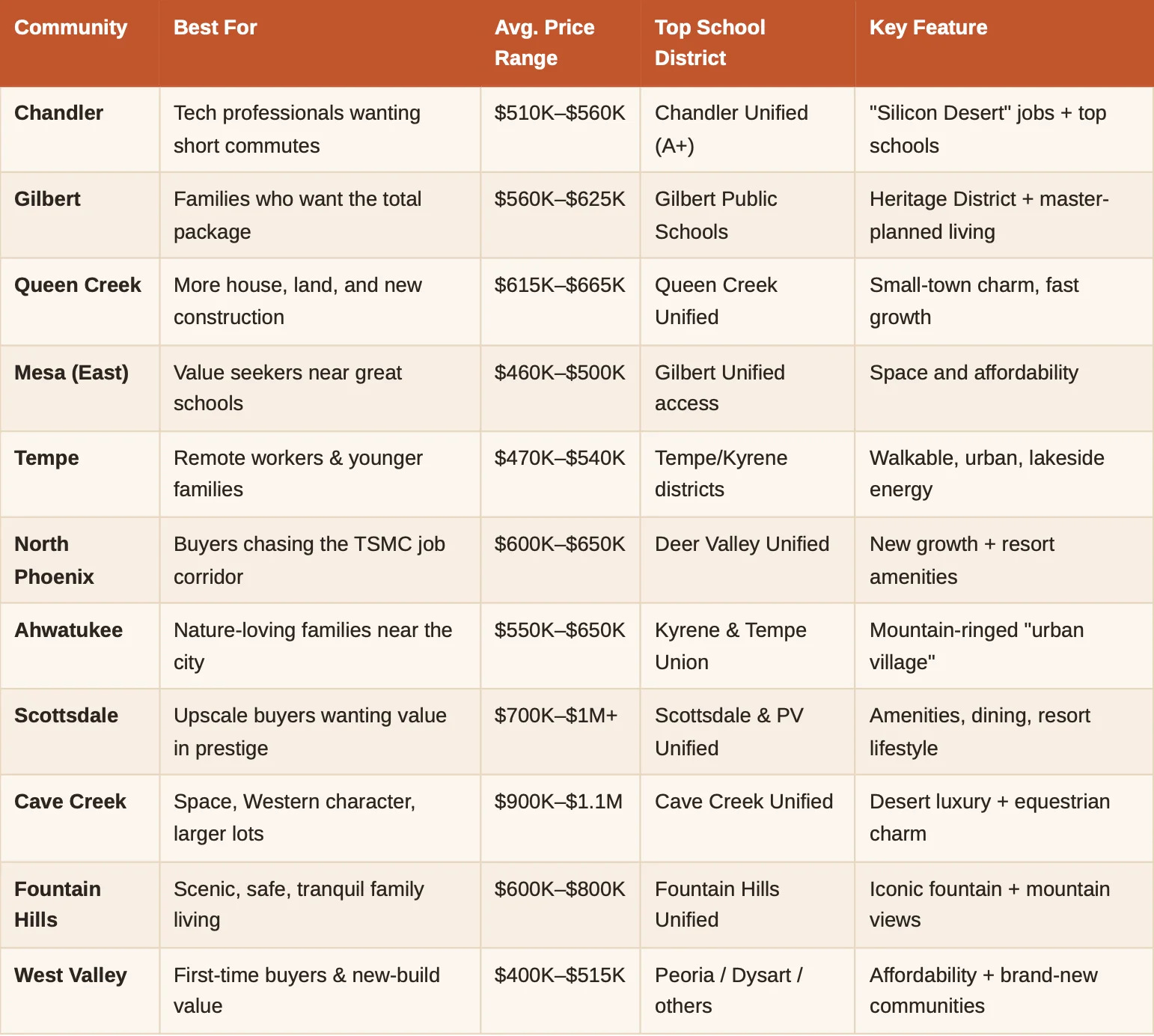
Ranges reflect 2026 market conditions and shift by neighborhood and home type. For a live, address-specific picture, reach out to Phoenix Homes.
Getting Oriented: Sky Harbor, Drive Times & the Heart of Phoenix
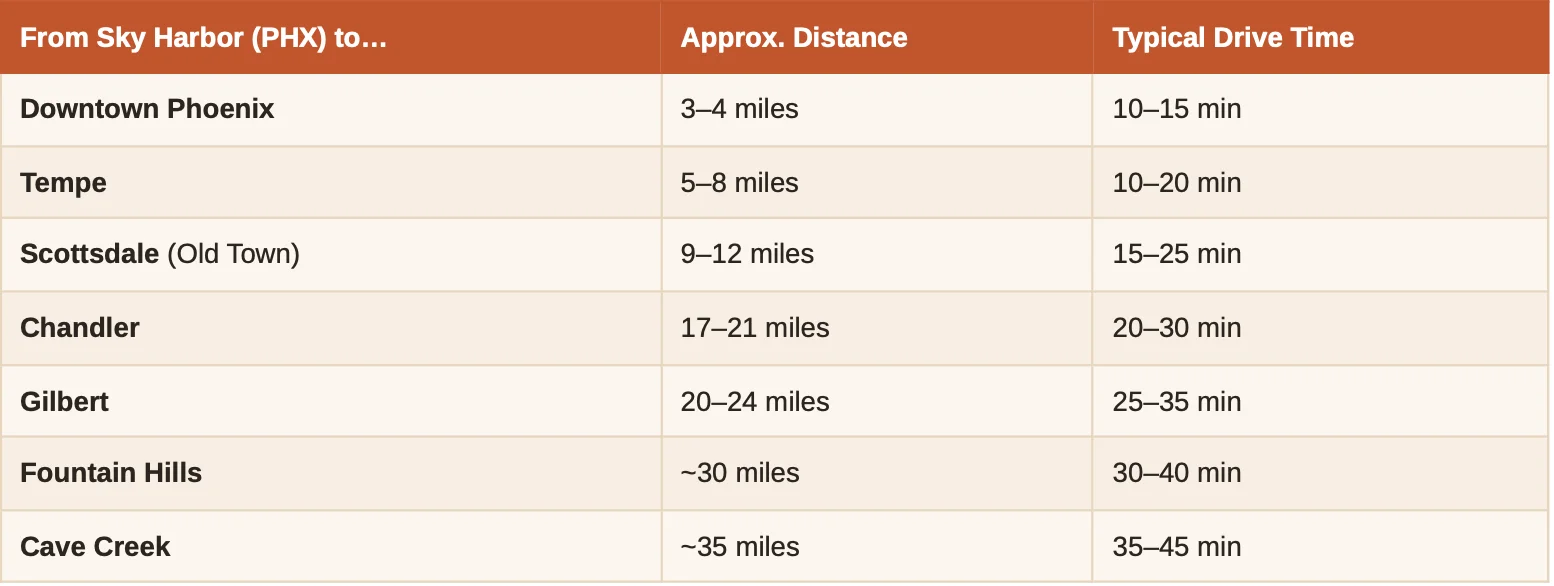
One of the Valley’s quiet superpowers is Phoenix Sky Harbor International Airport (PHX) — and it’s a bigger deal for relocating families than most realize. Because Sky Harbor sits at the geographic center of the metro (just 3–4 miles from downtown), your drive to nearly every suburb is shorter than you’d expect. It’s also consistently ranked among the least stressful and friendliest major airports in the country, with nonstop service across North America — a genuine gift for military families, frequent business travelers, and anyone with grandparents flying in from the state you’re leaving.
The city of Phoenix itself anchors it all: a real downtown with pro sports (the Suns, Diamondbacks, and Mercury all play within a few blocks), the Arizona Science Center, first-rate dining, and the leafy Encanto and Roosevelt Row districts. Most families settle in a suburb but treat downtown Phoenix as their “big night out” and cultural hub.
Downtown Phoenix
Phoenix Sky Harbor International Airport (PHX)
Here’s how long it typically takes to reach each of our featured communities from Sky Harbor, under normal (off-peak) conditions. Rush hour, spring training, and big events can add meaningfully — but even the farthest family suburbs stay within an easy day-to-day radius.
The East Valley: Where Most Relocating Families Land
If we had to point a family arriving from out of state to one region first, it’s usually the East Valley — the cluster of suburbs southeast of downtown Phoenix that consistently tops national rankings for schools, safety, and family amenities.
Vibe: Polished, professional, and purpose-built for families who want a short drive to a great job and an even shorter one to a great school. Chandler feels established without feeling old — think manicured neighborhoods like Ocotillo and Fulton Ranch, a walkable downtown, and dog parks on seemingly every corner.
Price Range: Median sale prices sit around $525,000–$531,000 in 2026, with homes typically moving in about 45–60 days — a pace that gives relocating buyers room to negotiate.
Schools: This is Chandler’s crown jewel. Chandler Unified School District is routinely ranked the #1 district in the metro and among the best in Arizona, earning an A+ grade. Standouts include Hamilton and Perry High Schools, Arizona College Prep, and gifted programs like Knox Gifted Academy. In a first-of-its- kind move, CUSD partnered with Intel and TSMC to launch a high school semiconductor program — a direct pipeline from the classroom to the region’s marquee industry.
Highlights: Over 100,000 local jobs across semiconductors, finance, and healthcare; a lively dining and arts scene downtown; and easy freeway access via the 101 and 202.
Best For: Semiconductor and tech professionals, dual-income households, and any family that ranks school quality at the very top of the list.
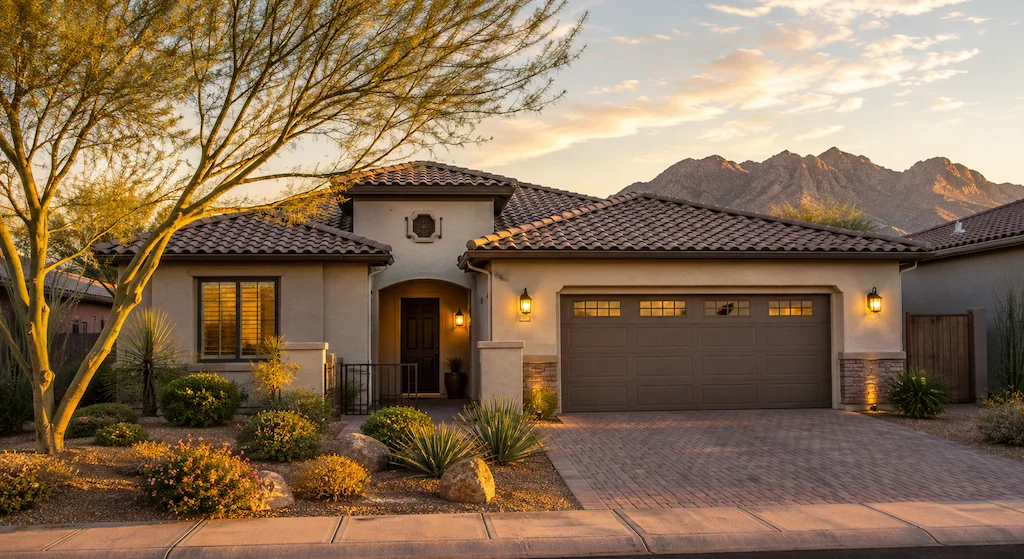
Vibe: If Chandler is the professional’s pick, Gilbert is the family generalist’s dream — a former farming town of nearly 290,000 that grew up beautifully. Its Heritage District is a genuinely charming, walkable downtown packed with restaurants and boutique shops, and master-planned communities like Agritopia and Power Ranch deliver that rare thing: neighborhoods where kids ride bikes to friends’ houses and neighbors actually know each other.
Price Range: Median sale prices run about $575,000–$590,000, one of the few East Valley markets posting modest year-over-year gains — a sign of steady, durable demand.
Schools: Gilbert Public Schools earns strong, improving marks, and parts of Gilbert also feed into top-tier Chandler and Higley programs. Consistent A-rated options and a reputation for safety make it a perennial “best place to raise a family” honoree.
Highlights: The Riparian Preserve at Water Ranch (a stroller-friendly nature escape), the Gilbert Art Walk, farmers markets, and a dense lineup of parks and youth sports.
Best For: Families who want it all — schools, safety, walkable charm, and community — and are willing to pay a slight premium for the whole bundle.

Queen Creek — More Home, More Land, More New
Vibe: The Valley’s fast-growing frontier, where families trade a slightly longer commute for newer homes, bigger floor plans, and even a little acreage. Queen Creek has held onto its agricultural soul — the Queen Creek Olive Mill and Schnepf Farms are beloved weekend staples — while building a modern, master- planned future around it. A brand-new walkable downtown, The Switchyard, is bringing Valley favorites and mixed-use energy right into town.
Price Range: Median prices land around $615,000–$665,000, but here’s the nuance: that higher sticker often buys more square footage and land than comparable East Valley markets, so value-per-foot can actually be excellent.
Schools: Queen Creek Unified is well-regarded and growing, with brand-new campuses opening to keep pace with the influx of young families.
Highlights: New construction with builder incentives, room to spread out, a genuine small-town community feel, and a slate of family events year-round.
Best For: Growing households that prioritize a newer, larger home and space over proximity to the urban core.
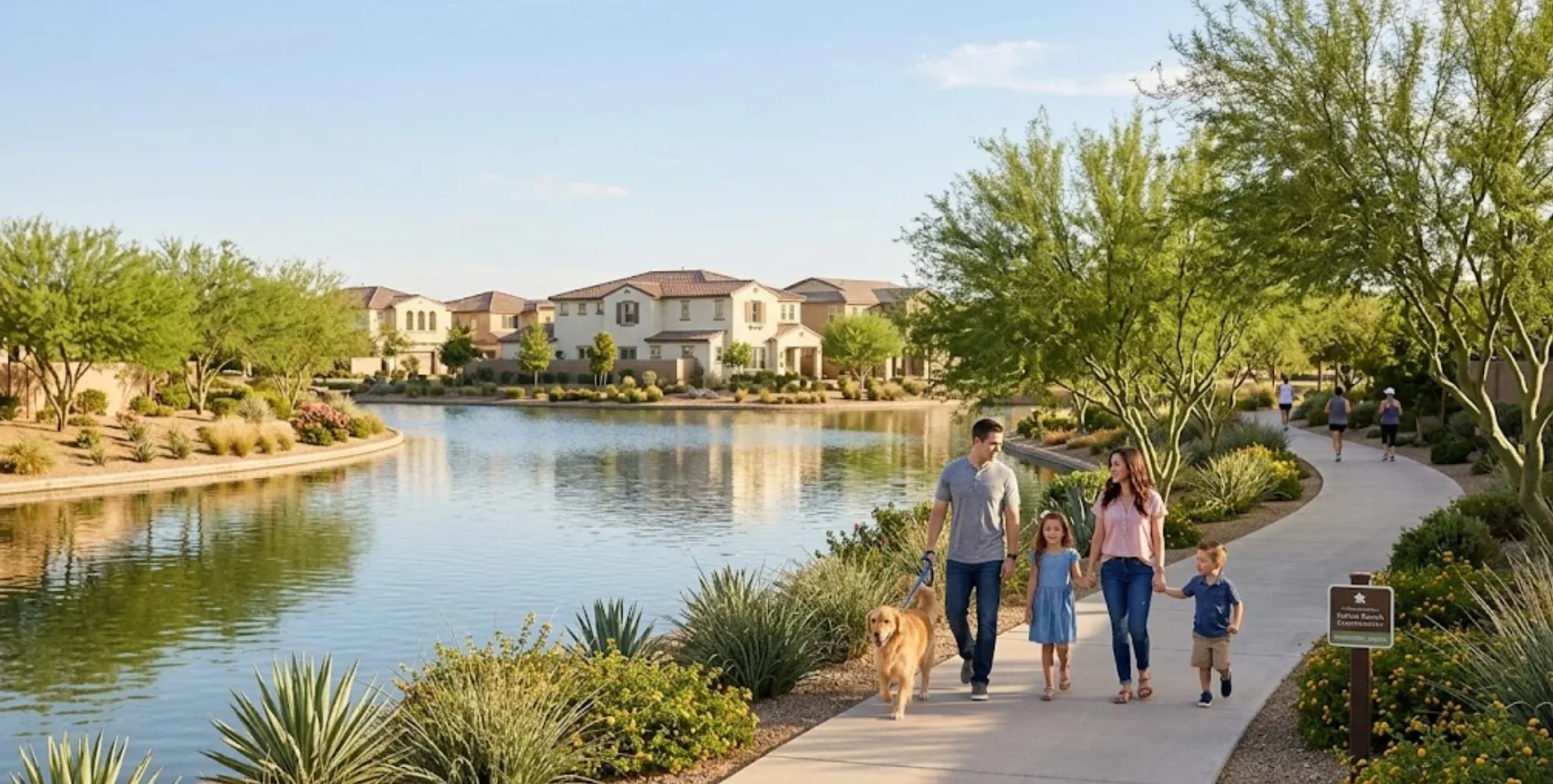
Two very different neighbors round out the East Valley.
Mesa is the metro’s affordability play. Median sale prices near $460,000–$500,000 make it one of the best values among established suburbs, and East Mesa in particular offers something clever: access to the coveted Gilbert Unified School District at noticeably lower price points than Gilbert proper. For families who want great schools without the Gilbert premium, East Mesa is a quiet insider favorite. It’s also the metro’s largest suburb, with abundant parks, aquatic centers, and a revitalized downtown.
Tempe trades yard space for walkability and energy. Home to Arizona State University, Tempe Town Lake, and a genuinely urban, bikeable core, it skews younger — ideal for remote workers, first-time buyers, and families who want cafe-and-park living over cul-de-sac living. Median prices generally run $470,000– $540,000, and the Tempe and Kyrene districts serve much of the city well.
Best For: Ahwatukee Foothills — The Mountain-Ringed Urban VillageMesa — value-focused families who still want strong schools and space.
Tempe — remote professionals and younger families who prize walkability and central access.

North Phoenix & Ahwatukee: Growth Corridors and Nature Escapes
North Phoenix — Riding the TSMC Wave
Vibe: The metro’s most dynamic growth story. Anchored by the enormous TSMC semiconductor campus and the adjacent Halo Vista mixed-use development, North Phoenix communities like Norterra, Union Park, Desert Ridge, and Anthem pair resort-style amenities with the metro’s strongest employment-driven appreciation potential.
Price Range: Family-oriented pockets around Norterra (85085) and Desert Ridge (85054) carry medians of roughly $600,000–$650,000, with a wide range of new-build and established options.
Schools: Much of the area is served by Deer Valley Unified, which has climbed the rankings with strong college-prep programs and favorable student-teacher ratios.
Highlights: Resort pools, hiking at the nearby preserves, the Desert Ridge Marketplace for shopping and dining, and — critically — front-row access to the semiconductor jobs reshaping the region.
Best For: Buyers whose careers tie to the North Phoenix tech corridor and who want long-term appreciation potential alongside amenity-rich living.
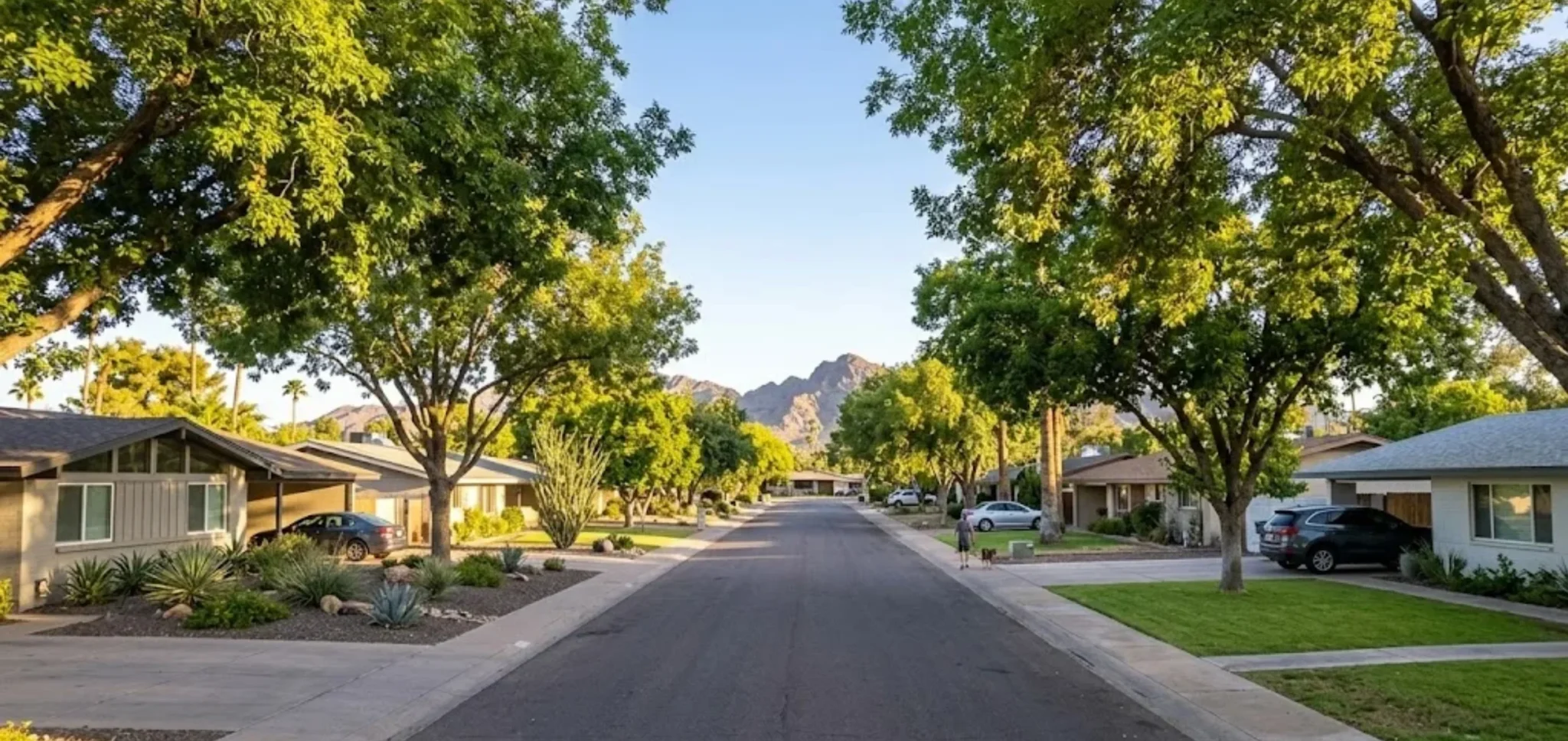
Ahwatukee Foothills — The Mountain-Ringed Urban Village
Vibe: Tucked against South Mountain Park, Ahwatukee feels like a secluded pocket of nature that happens to be minutes from the city. Locals call it “the urban village, ” and the appeal is exactly that blend — quiet, established, tree-lined neighborhoods with trailheads at the doorstep and downtown Phoenix a quick freeway hop away.
Price Range: Homes generally run $550,000–$650,000, with plenty of larger established properties and mountain-view lots.
Schools: Served by the well-regarded Kyrene (elementary/middle) and Tempe Union (high school) districts, with a strong reputation among families.
Highlights: Direct access to South Mountain hiking and biking, golf, community pools, and a genuinely close-knit feel despite its central location.
Best For: Nature-loving families who want established homes, top hiking, and city proximity without the frontier drive.
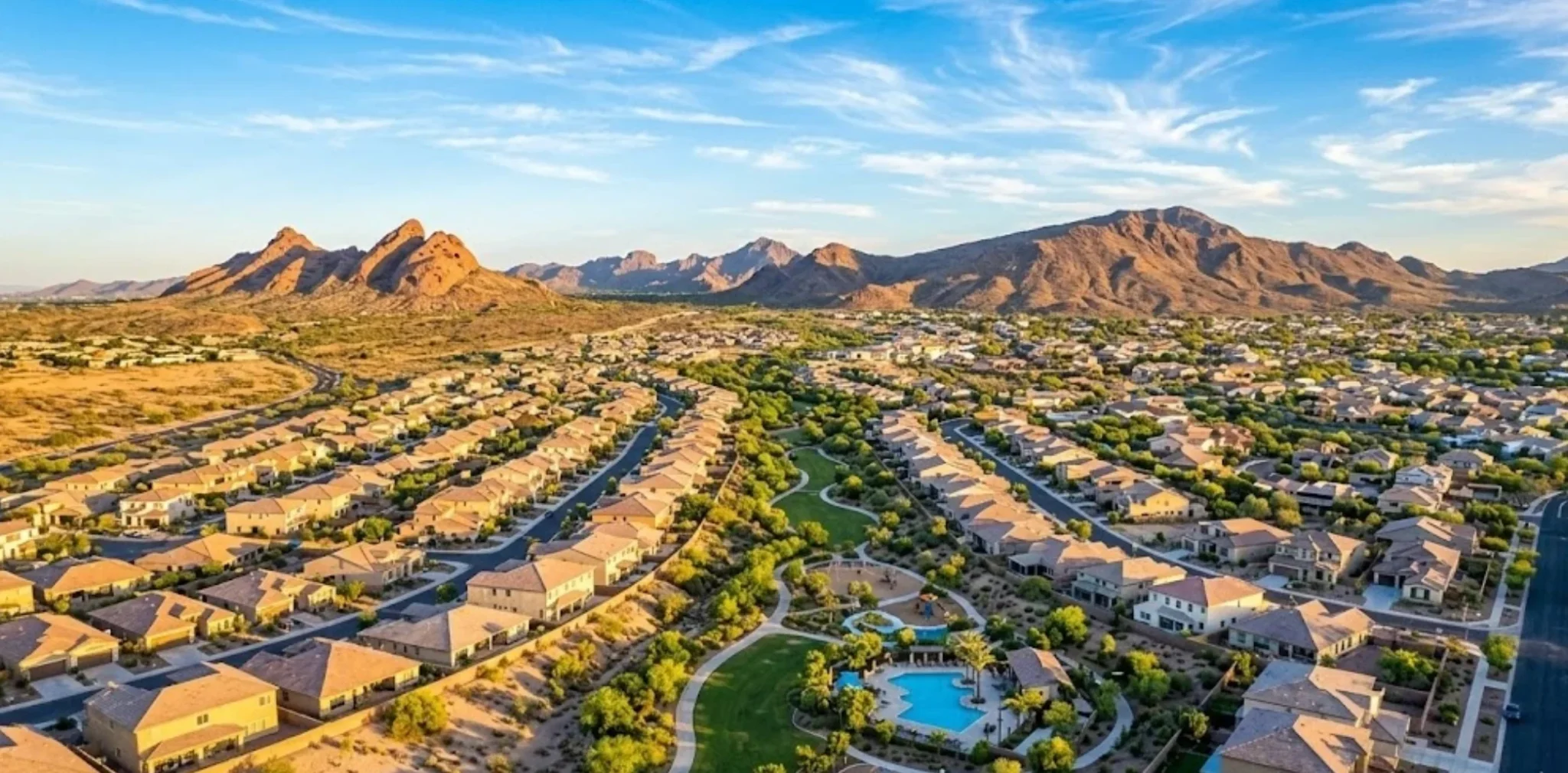
Vibe: Scottsdale is the Valley’s luxury and lifestyle capital — world-class dining, resorts, golf, and Old Town’s arts scene. It’s pricier, yes, but families who want that polish should know there’s a smart value play hiding inside it.
Price Range: Broadly $700,000 to $1M+, but savvy buyers zero in on ZIP 85254 — the so-called “Magic ZIP”— which delivers a Scottsdale address and top-rated Paradise Valley Unified schools at a median well below neighboring luxury pockets.
Schools: Scottsdale — Prestige, With a Value Angle Scottsdale Unified and Paradise Valley Unified both rank among the metro’s best, with strong test scores and college-prep offerings.
Highlights: Resort amenities, greenbelt and canal paths, premier shopping, McCormick-Stillman Railroad Park for the kids, and some of the metro’s most desirable established neighborhoods.
Best For: Upscale families who want amenities and prestige — and are willing to shop strategically for the best value inside a premium market.
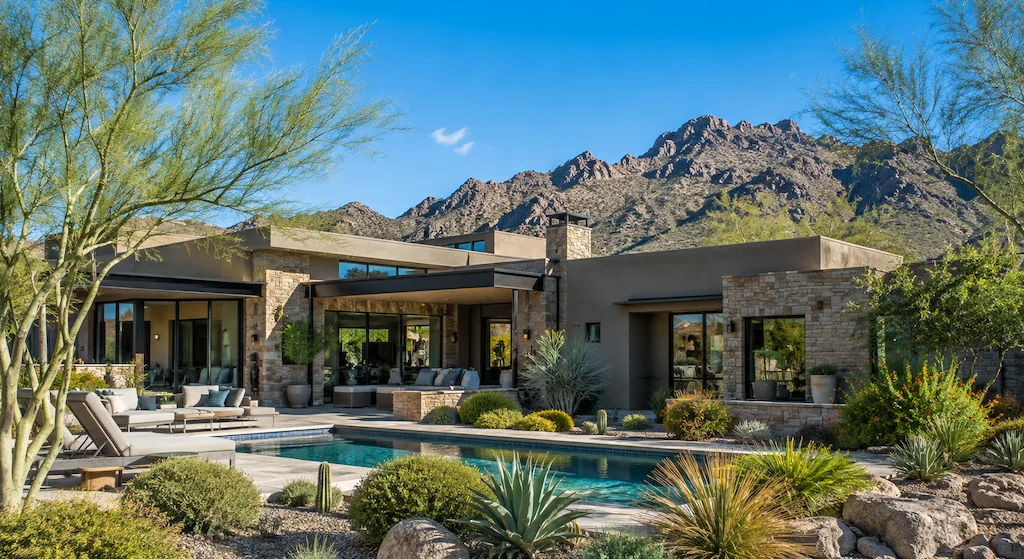
Vibe: If your family dreams of room to breathe, mountain views, and a little Old West soul, Cave Creek is unlike anywhere else in the metro. It’s a rustic-luxury, semi-rural town of horse properties, saguaro-studded lots, hiking and mountain-bike trails, and a genuine frontier main street of galleries, saloons, and Sunday- drive charm — yet it’s still an easy run to Scottsdale’s shopping and jobs.
Price Range: This is a premium market: median sale prices generally land around $1,000,000–$1,100,000, reflecting larger lots, custom homes, and that coveted desert seclusion. More attainable options exist, but budget accordingly.
Schools: Cave Creek Unified School District is well-regarded, with respected campuses including Black Mountain Elementary, Sonoran Trails Middle, and Cactus Shadows High School, plus private options.
Highlights: Direct access to the Cave Creek and Spur Cross recreation areas, proximity to Bartlett Lake, equestrian living, and a tight-knit, character-rich community.
Best For: Higher-budget families who prioritize space, privacy, desert scenery, and Western character over walkable suburban density.
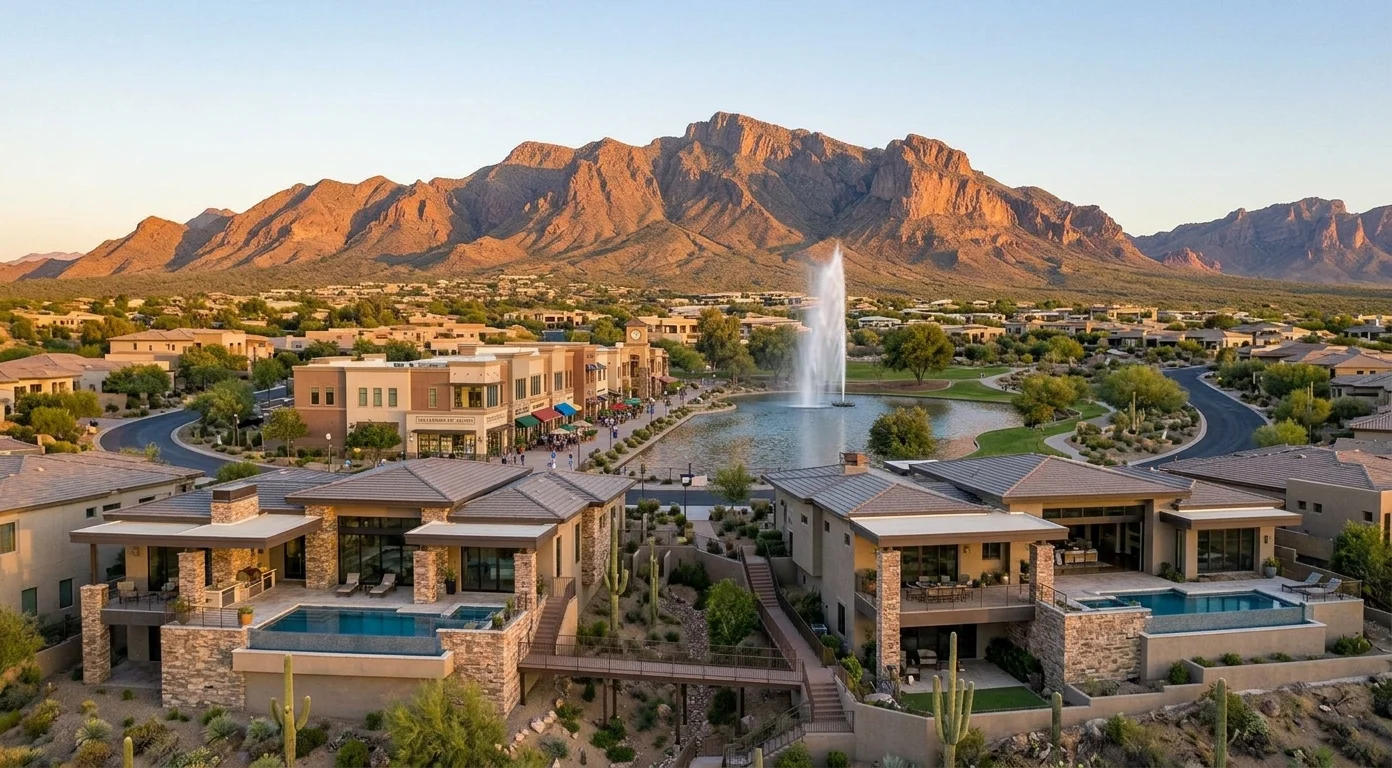
Vibe: Ringed by the McDowell Mountains and the Fort McDowell preserve, Fountain Hills is a picturesque, tucked-away town built around its namesake — a landmark fountain that was once the tallest in the world and still shoots skyward on the hour above a lakeside park. It’s quieter and more established than the fast- growing suburbs, prized for safety, stunning views, dark skies, and a slower, community-first pace.
Price Range: Single-family homes cluster around $700,000–$800,000, with attainable detached entry points in the $500Ks–$600Ks and luxury estates in communities like FireRock running well higher. Rising inventory in 2026 has given buyers more room to negotiate.
Schools: Fountain Hills Unified School District serves the town with a compact, well-regarded set of campuses (including Fountain Hills High), complemented by charter and private options.
Highlights: Fountain Park and the famous fountain, McDowell Mountain trails, golf, art fairs, and one of the safest, most scenic settings in the metro.
Best For: Families who value tranquility, safety, nature, and views — and don’t mind a smaller-town feel with a bit more distance from the urban core.
What It Costs to Live Here
Right after “which neighborhood?” , every relocating family asks “what will day-to-day life actually cost?” The short answer: a typical single adult budgets around $2,700 a month and a family of four around $5,900– $6,000 all-in — modestly above the national average. But that headline is almost entirely about housing.
Strip out the mortgage and Phoenix’s everyday costs sit at or below national norms, and well below what families leaving California or the Pacific Northwest are used to.
The one line item that surprises newcomers is the summer electric bill. Think of it the way northerners think about winter heat: from May through October, air conditioning does the heavy lifting and your power bill climbs with it. Budget for the cooling season and the rest falls into place.
Utilities — single-family home, monthly Arizona’s electricity rate is genuinely cheap — about 15¢ per kWh, roughly a quarter below the national average — but summer usage is high, so the season shows up in the bill, not the rate.
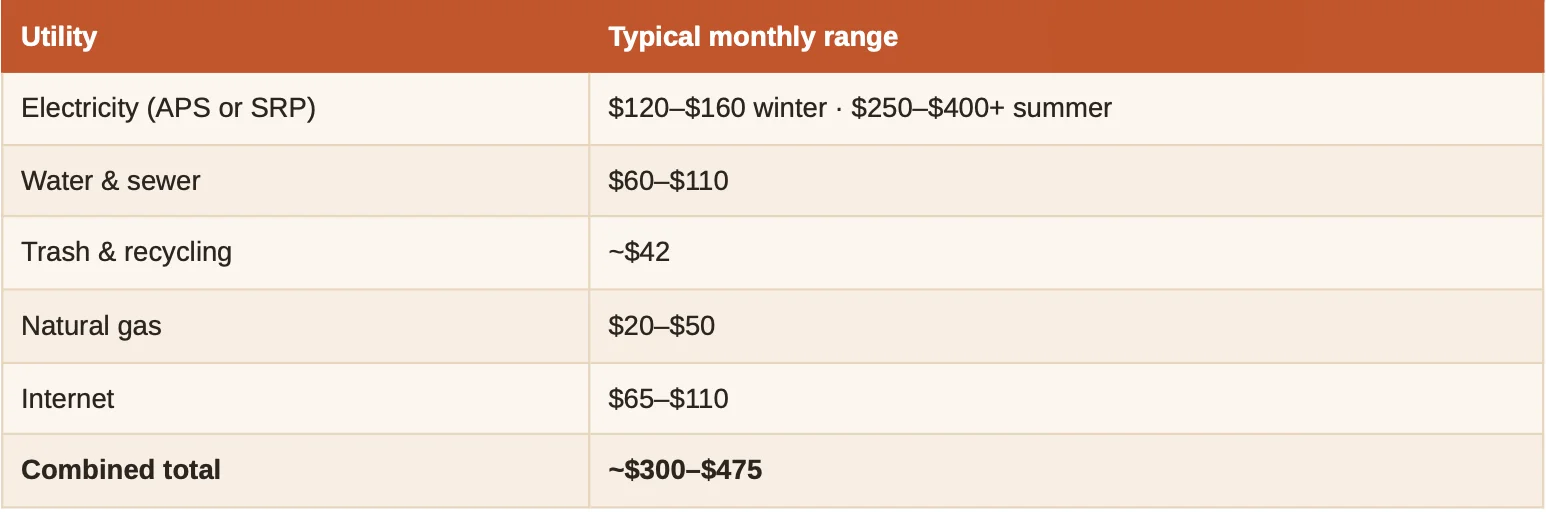
A newer, energy-efficient home can trim $30–$70 a month off that total — one more reason the master- planned communities in this guide are so popular with transplant families.
Groceries — monthly
Grocery prices track close to the national average and run noticeably cheaper than coastal California. Fry’s, Safeway, Costco, and Sprouts are the local value leaders.

Everyday services & typical prices
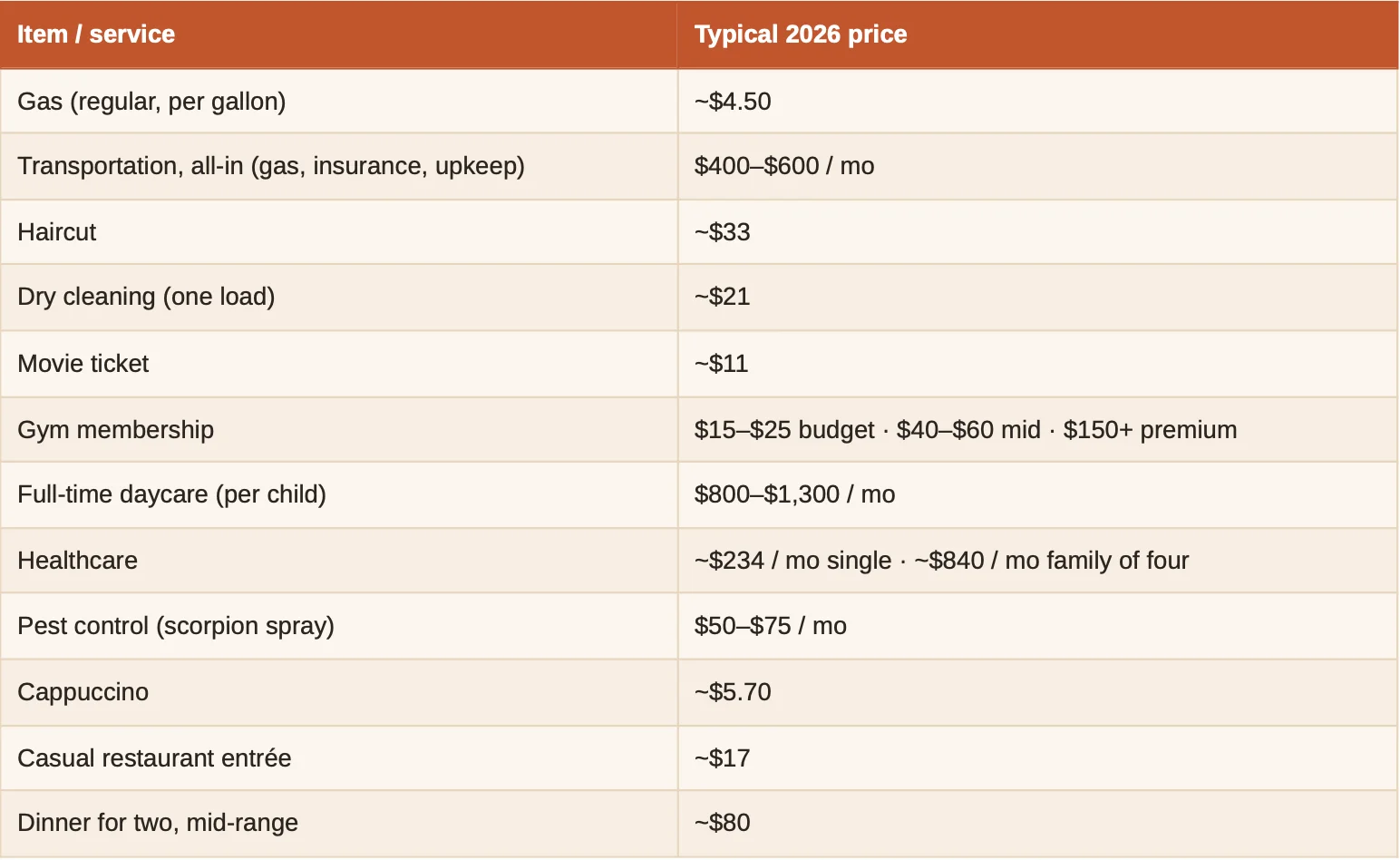
Two costs that never show up on a utility statement but belong in your budget: HOA fees
These are common in the newer master-planned and luxury communities featured here, run roughly $100 to $800+ a month depending on amenities; and because the Valley is car-oriented, transportation is a larger line than in transit-heavy metros — though the short suburban commutes help offset it.
The bottom line for coastal families: when groceries, healthcare, and everyday services all sit at or below the national average — and you compare them to what you’re paying now in California or Seattle — the Phoenix math is exactly why so many families make the move.
Property Taxes, HOA Dues & Home Insurance
Your true monthly payment is more than principal and interest — it’s shaped by three carrying costs that vary widely across the Valley. The encouraging news for relocating families: Arizona is genuinely tax- friendly and home insurance sits near or below the national average. The real variable is the HOA, and it pays to read the fine print before you fall for a floor plan.
Property Taxes — among the lowest in the West Arizona keeps residential property taxes low by design. Across Maricopa County (which covers Phoenix and every suburb in this guide), the effective rate runs roughly 0.45%–0.60% of a home’s market value — about half the national average of nearly 1%.
The median Phoenix homeowner pays somewhere around $1,900–$2,000 a year, or about $160/month. Three built-in features keep it that way: homes are assessed at just 10% of their Limited Property Value (not full market value); that value can’t rise more than 5% per year, shielding you from appreciation spikes; and primary residences get a state homeowner rebate (40% of primary school taxes, up to $600) plus a constitutional 1% cap on primary taxes.
Here’s roughly what to expect, using a blended ~0.55% effective rate (your exact rate depends on city and school district, so verify by address):
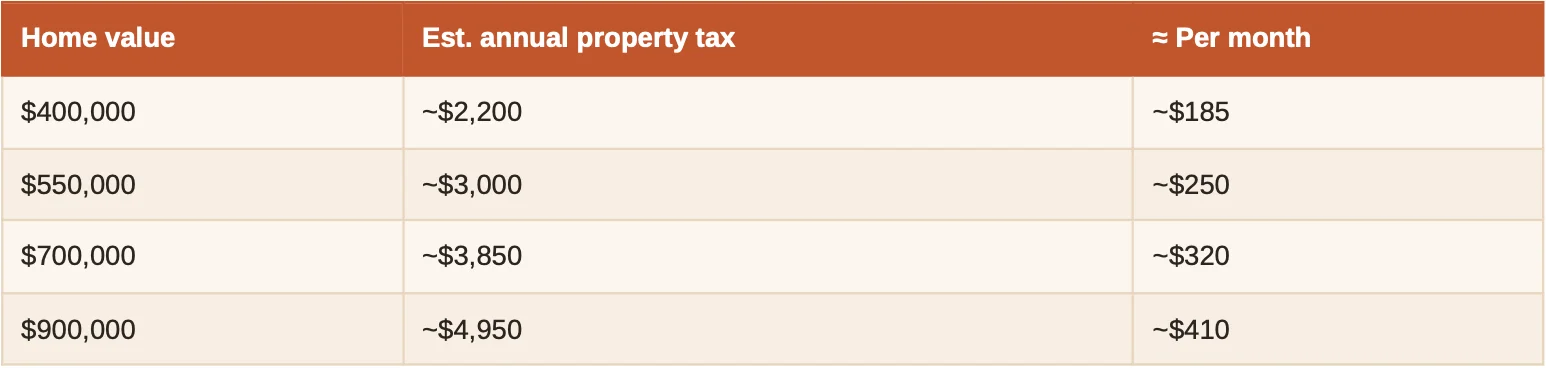
For perspective, a $500,000 home that runs roughly $2,500–$3,000 a year here would often cost $9,000 – $10,000+ in Texas or Illinois. (Arizona also levies a low flat 2.5% state income tax and doesn’t tax Social Security — part of why so many California and Midwest families run the numbers and move.)
HOA Dues — common here, so read the fine print
Homeowners associations are far more prevalent in Arizona than nationally — about 65% of Arizona listings carry HOA dues (versus roughly 44% nationwide), and more than half of metro Phoenix residents live in an HOA community. The median due is around $110–$120 a month, with most homeowners paying $60–$340, though amenity-rich communities run higher.
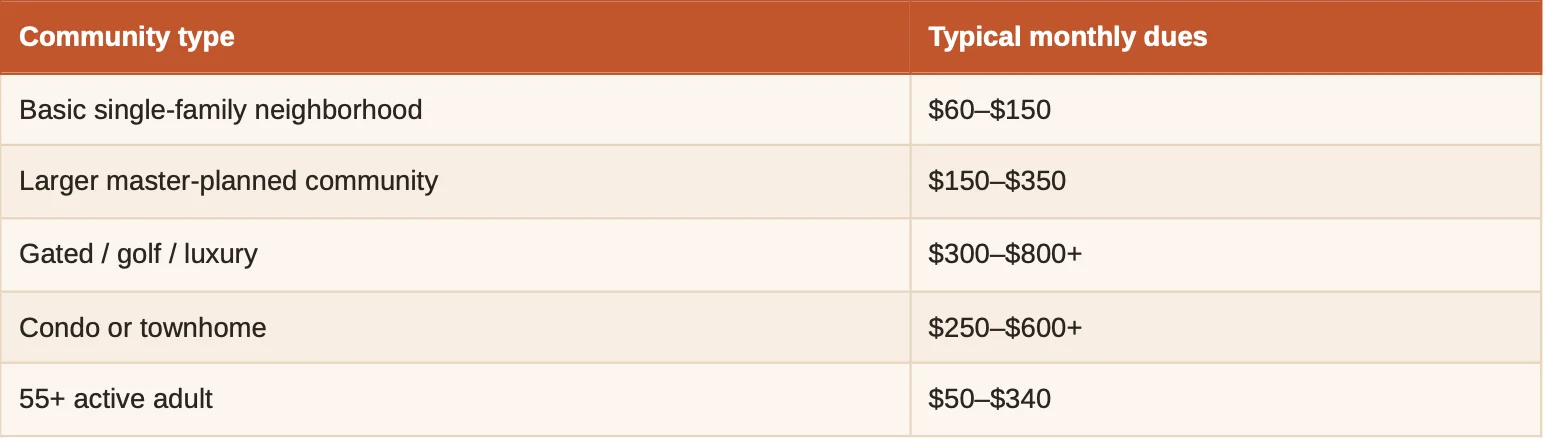
Three things every buyer should check before committing: whether the home sits under both a master and a sub-association (you can owe two sets of dues — get both numbers); any one-time capital fee at closing, which can run from a few hundred dollars to several thousand; and the community’s reserve study, because Arizona doesn’t require HOAs to fund reserves — thin reserves are where surprise special assessments come from. Always request the current fee schedule and reserve details up front. It’s exactly the kind of due diligence we handle for relocating families.
Home Insurance — near the national average, with local wrinkles A standard Phoenix homeowners policy (HO-3, around $300,000 in dwelling coverage) averages roughly $2,400–$2,700 a year — about $200–$225 a month — in line with or slightly below the national average.
Arizona is one of the more affordable states to insure a home: no hurricanes, and the metro core sees little wildfire or earthquake exposure.
A few local factors move the number. Roof age and condition is the biggest lever — the extreme summer heat ages roofs faster, so a newer roof meaningfully lowers your premium. Monsoon wind and hail are the leading claim drivers, and homes on the growing desert edge (parts of North Phoenix, Cave Creek, and the foothills) can fall in the “wildland-urban interface, ” which nudges rates up. One coverage note worth flagging: a standard policy covers fire, wind, hail, theft, and liability but not flood — monsoon flash flooding is a real risk in some pockets, so confirm whether your address needs separate flood coverage. Premiums vary a lot by carrier, so getting three or four quotes commonly saves hundreds.
Putting it together: for a typical $550,000 family home in a master-planned East Valley community, plan on roughly $250/month property tax + $150–$250 HOA + ~$210 insurance layered on top of your principal and interest. Knowing that full picture up front is what keeps a relocation budget from springing surprises.
Lake Life: Water Escapes Near the Valley
Here’s the surprise that delights nearly every transplant: the Sonoran Desert is dotted with big, beautiful lakes, most within a day-trip radius of the metro. Come spring and fall — and all summer for the water- lovers — Valley families spend weekends boating, paddling, fishing, and cooling off. A boat, a couple of kayaks, or just a cooler and a shade tent turn these into your household’s favorite weekend habit.

Family Adventures: Things to Do Around Phoenix
Between the sunshine and the sheer density of family attractions, boredom is not a Phoenix problem.
Here’s the shortlist we hand every relocating family — the places your weekends and school breaks will revolve around.
In & around Papago Park (central Phoenix): The Phoenix Zoo and the world-class Desert Botanical Garden sit side by side, with the easy Hole-in-the-Rock hike nearby —an ideal half-day for younger kids.
Downtown Phoenix: The hands-on Arizona Science Center and the beloved Children’s Museum of Phoenix are rainy-day (or triple-digit-day) heroes, with Castles N’ Coasters and the vintage rides at Enchanted Island at Encanto Park for a classic amusement-park afternoon.
Scottsdale & the Salt River side: Family Adventures: Things to Do Around PhoenixOdySea Aquarium and the adjacent Butterfly Wonderland anchor a huge family entertainment district; the Musical Instrument Museum (MIM) is a genuine bucket-list attraction; and McCormick-Stillman Railroad Park delivers train rides and a carousel the little ones adore.
East & Southeast Valley: Gilbert’s Riparian Preserve at Water Ranch is a free, stroller-friendly wildlife walk, while Queen Creek’s Schnepf Farms and the Queen Creek Olive Mill turn seasonal festivals, u-pick, and farm-to-table into weekend traditions.
West Valley: Wildlife World Zoo, Aquarium & Safari Park in Litchfield Park is Arizona’s largest collection of exotic animals — a full day on its own.
The great outdoors: Iconic hikes at Camelback Mountain, Piestewa Peak, South Mountain Park (one of the largest urban parks in the country), and the McDowell Sonoran Preserve keep active families busy year-round. And every February and March, the Cactus League brings 15 Major League Baseball teams to spring-training ballparks all over the metro — a rite of passage for new Arizonans.
Family fun hub — Phoenix & Scottsdale attractions
Living in Greater Phoenix — Need to Know
Choosing a community is step one. Here’s the lived-in reality that shapes daily family life across the Valley.
School Districts. Arizona is a strong school-choice state, which means your options aren’t limited to your immediate boundary — but boundaries still drive home values and daily logistics. The metro’s standouts include Chandler Unified (frequently #1), Scottsdale and Paradise Valley Unified, Gilbert Public Schools, Deer Valley, and the highly regarded BASIS and other charter networks with campuses Valley- wide.
The single most important step for a relocating family is verifying the exact assigned schools for a specific address before you commit — assignments can change block to block. Healthcare. Families relocating for the long haul care about medical access, and the Valley delivers: Banner Health, Mayo Clinic Phoenix (nationally ranked), and Dignity Health anchor a deep network of hospitals, pediatric care, and specialists, with costs running modestly below the national average.
Outdoor Lifestyle & Climate. Let’s be straight about the heat: summers (roughly June through September) are genuinely hot, and life shifts indoors or to early mornings, pools, and lakes during the peak. But the reward is October through May — arguably the best weather in the country, when patios, trails, ballfields, and lakeshores stay busy under blue skies. Most transplant families adapt within a season and never look back.
Commutes & Connectivity. The freeway grid — the Loop 101, Loop 202 (including the South Mountain extension), the 51, and I-10/I-17 — makes cross-Valley travel manageable, with most suburban-to- employment-center commutes landing in the 20–40 minute range. Sky Harbor sits centrally, and for remote workers, reliable connectivity plus abundant co-working and coffee-shop options make the “work from anywhere in the Valley” life genuinely comfortable.
Your Relocation Game Plan
Moving a family across state lines is a logistics project, and the families who do it smoothly tend to follow the same rough sequence:
Start with priorities, not listings. Rank what matters most — school district, commute ceiling, budget, home age, yard size, community feel. That ranking is what turns “the whole Phoenix metro” into two or three target communities.
Verify the non-negotiables remotely. Confirm school assignments by address, run the real commute to your (or your spouse’s) workplace, and pressure-test the budget with current rates and any builder incentives on the table. This is where a local partner saves you from expensive surprises.
Time your visit strategically. A single well-planned scouting trip — touring your two or three shortlisted communities in person, ideally on both a weekday and a weekend — is worth a dozen virtual tours. We build these itineraries for out-of-state families regularly.
Lean on local expertise. New construction, resale, incentives, and neighborhood micro-markets all behave differently across the Valley, and the differences are worth real money. Working with an agent who knows the block, not just the ZIP, is the difference between a good buy and a great one.
Let’s Find Your Place in the Valley Whether you’re drawn to Chandler’s top schools, Gilbert’s community charm, Queen Creek’s wide-open new builds, Cave Creek’s desert space, Fountain Hills’ scenic calm, or the West Valley’s unbeatable value, there’s a corner of Greater Phoenix built for your family — and a smart way to land there.
That’s what we do. For 30-plus years, Phoenix Homes has guided families through exactly this move, from the first “should we?” to the keys in your hand. Reach out at phoenixhomes.com and let’s turn your relocation into a homecoming.
Welcome to Phoenix! The Phoenix Homes Team
Contact us today.
480-731-4663