August 2026 Phoenix Housing Market Update
Supply crossed the line — and the leverage shifted.
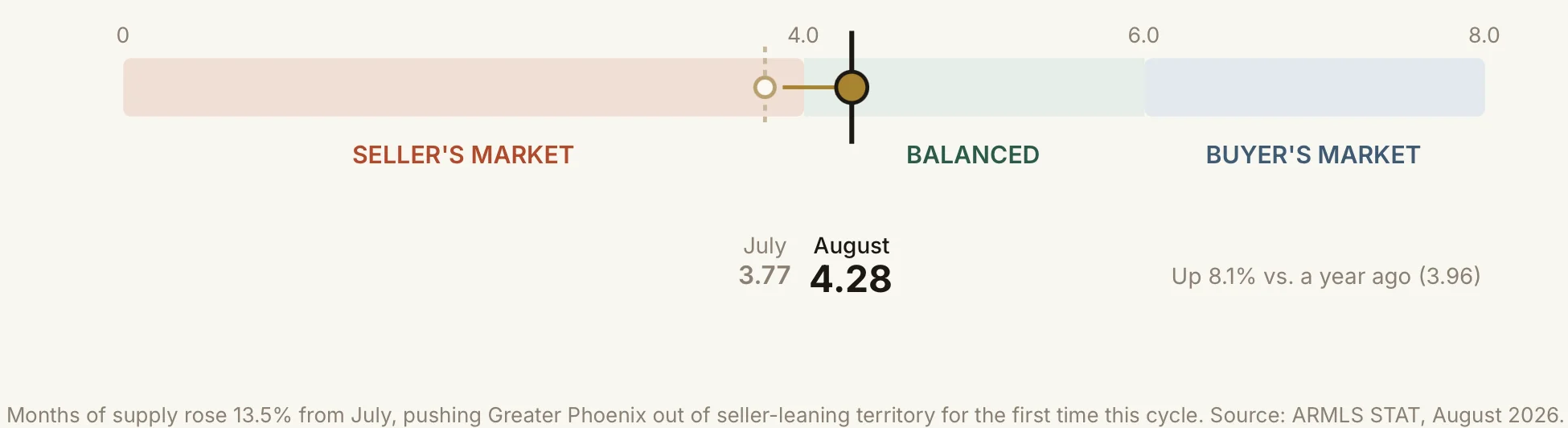
For a year, Greater Phoenix has sat just inside seller territory. In August, that changed. The August 2026 ARMLS data shows months of supply climbing to 4.28 — past the four-month mark that separates a seller-leaning market from a balanced one. Prices are holding, but for the first time this cycle, buyers have both choice and room to negotiate.
Where the market sits — months of supply
Under 4 months favors sellers · 4–6 is balanced · over 6 favors buyers
Read August’s surface numbers and it looks like a slowdown: closed sales fell 13.13% from July, absorption cooled, and homes lingered longer. But August in Phoenix is always quiet — buyers and sellers wait out the 110-degree afternoons and the back-to-school scramble. The seasonal noise isn’t the story.
The story is structural. Two things happened underneath the summer lull that will shape the fall market. First, inventory tipped the balance of power. With 23,406 active listings and a slower sales pace, months of supply climbed to 4.28 — and that number carries meaning. Under four months, the math favors sellers. At 4.28, Greater Phoenix is now a genuinely balanced market, and every independent metro read agrees: the leverage has shifted toward buyers, unevenly, depending on price point and location.
Second, the gap between what sellers ask and what buyers pay widened. That single spread tells you more about August than any headline.
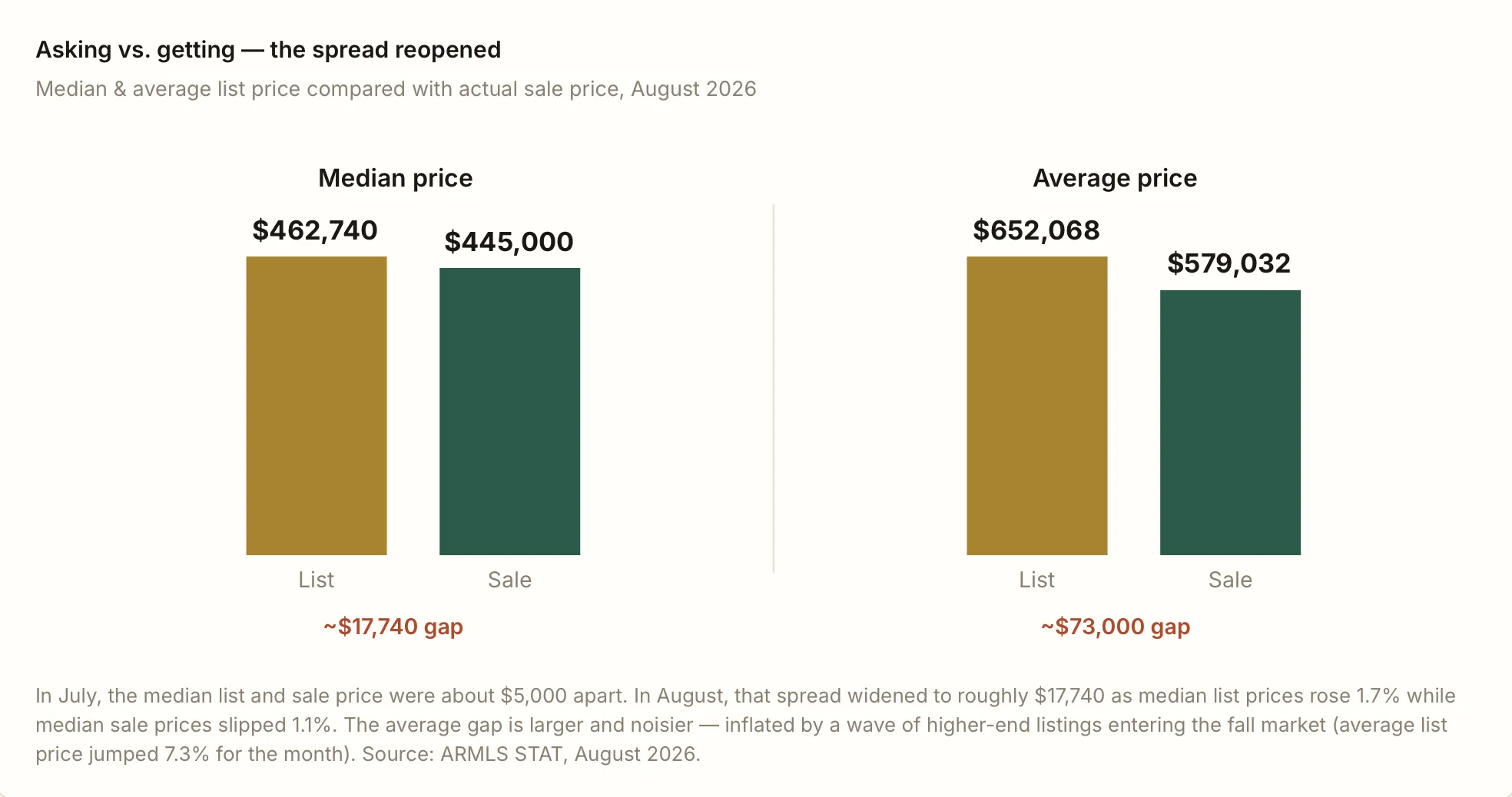
In July, a disciplined market kept those two numbers within $5,000 of each other — priced right, homes sold close to ask. In August, sellers grew more optimistic (median list up 1.7%) even as buyers pulled back (median sale down 1.1%). The message is plain: the room for aspirational pricing that reappeared over the summer is already being tested, and the market is answering with longer timelines instead of higher prices.
Prices are holding — this is rebalancing, not a retreat
In July, a disciplined market kept those two numbers within $5,000 of each other — priced right, homes sold close to ask. In August, sellers grew more optimistic (median list up 1.7%) even as buyers pulled back (median sale down 1.1%). The message is plain: the room for aspirational pricing that reappeared over the summer is already being tested, and the market is answering with longer timelines instead of higher prices.
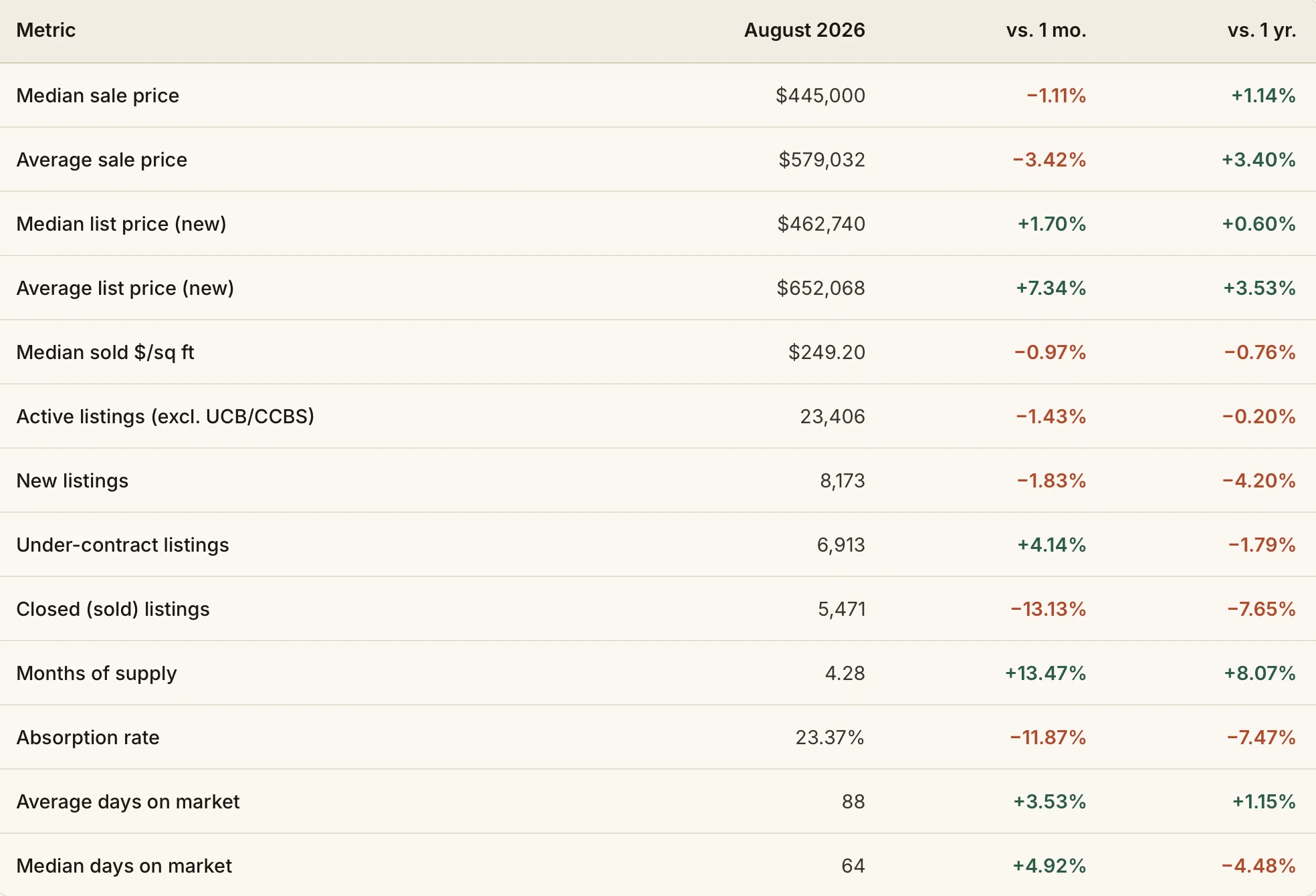
August 2026 at a glance
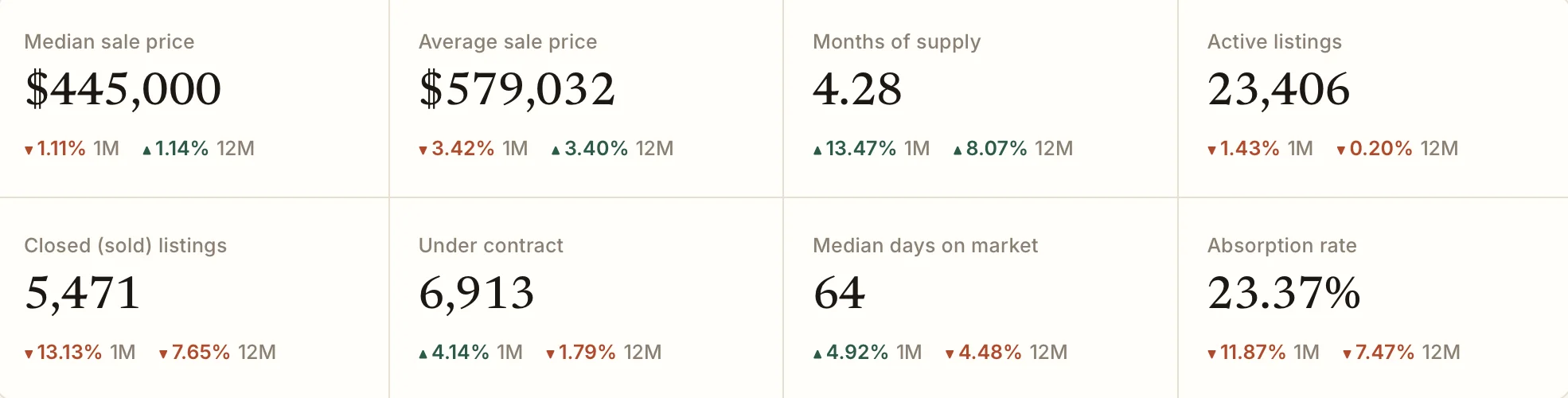
Greater Phoenix · change vs. prior month (1M) and prior year (12M)
Demand cooled — but fall is showing a pulse
The softer side of August is real and worth naming honestly. Closed sales fell 7.65% year over year, not just month over month, so this is more than seasonality — buyers are genuinely more cautious. The absorption rate (the share of inventory selling each month) dropped to 23.37% from 26.52% in July. And homes are taking longer: average days on market rose to 88, with the typical home now going under contract in 64 days.
But look at one number moving the other way. Homes placed under contract rose 4.14% from July to 6,913 — the leading indicator for September and October closings. That’s the first green shoot of the fall selling season, and it suggests the buyers who paused in the heat are quietly re-entering as temperatures — and, eventually, competition — ease.
Rates are the wild card holding buyers back
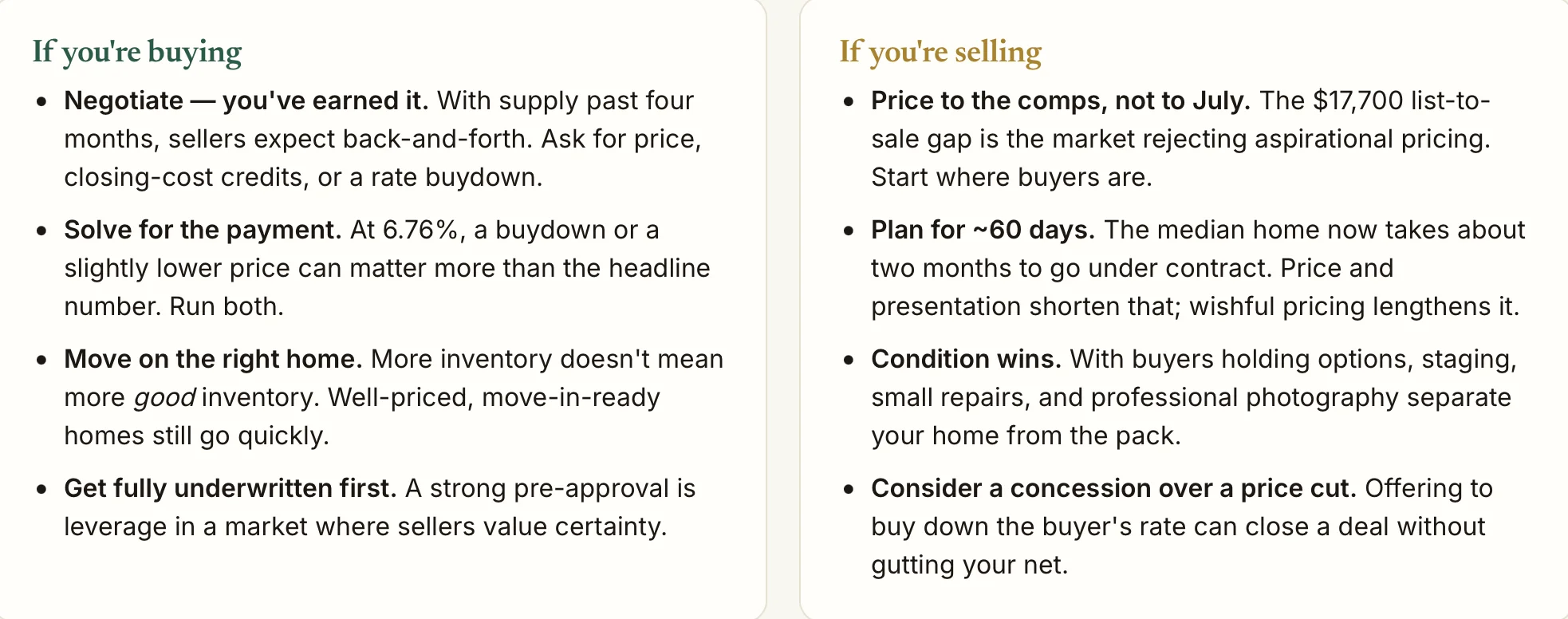
If inventory handed buyers leverage in August, financing costs are what’s keeping them measured. The average 30-year fixed mortgage rate reached 6.76% as of September 10, 2026 (Freddie Mac) — its highest level in roughly 13 months, and up from about 6.66% in late August. Every tenth of a point trims what a buyer can borrow, which is exactly why more inventory hasn’t reignited a bidding-war market.

The forecast picture is stable rather than dramatic. Most major forecasters expect the 30-year rate to hold in the low-to-mid 6% range through the rest of 2026, with the Federal Reserve’s mid-September meeting the nearest catalyst that could nudge them. Translation: waiting for a big rate drop is a gamble, and it means giving up today’s negotiating room in the meantime.
The playbook for fall 2026
Full August 2026 ARMLS data
Greater Phoenix, all property types. Percent changes compare August 2026 with the prior month and the same month a year earlier.
Phoenix housing market FAQ
Is the Phoenix housing market going up or down in 2026?
Holding. As of August 2026 the Greater Phoenix median sale price was $445,000 — down about 1% from July but still up 1.14% year over year. Values are stable; what changed in August is leverage, not price. A jump in inventory has handed buyers more room to negotiate.
Balanced, with the edge in negotiation going to buyers. Months of supply rose to 4.28 in August — up from 3.77 in July — which moves Greater Phoenix out of seller-leaning territory (under four months) and into a balanced market. Independent metro reads describe it as a mild buyer's market that varies by price point and location.
Two forces. First, Phoenix summer seasonality — closings always cool in the heat, and sold listings fell 13.13% from July. Second, rising mortgage rates trimmed buyer purchasing power. Sold listings were also down 7.65% year over year, so demand has genuinely softened — though homes under contract rose 4.14% for the month, an early sign fall activity is firming.
The average 30-year fixed rate reached 6.76% as of September 10, 2026 (Freddie Mac) — its highest level in about 13 months and up from roughly 6.66% in late August. Most forecasters expect rates to stay in the low-to-mid 6% range through the rest of 2026, with the Federal Reserve's mid-September meeting the closest catalyst to watch.
It depends on your numbers, but the window is favorable for prepared buyers: more inventory and real negotiating room, offset by higher financing costs — so shop the monthly payment, not just the sticker price, and ask about rate buydowns and concessions. Sellers can still do well by pricing to recent comps, presenting the home in top condition, and planning for roughly two months on market rather than a bidding war. The right move is specific to your finances — worth a conversation with an agent and lender.