Market Overview: Spring 2026 Arrives with Force
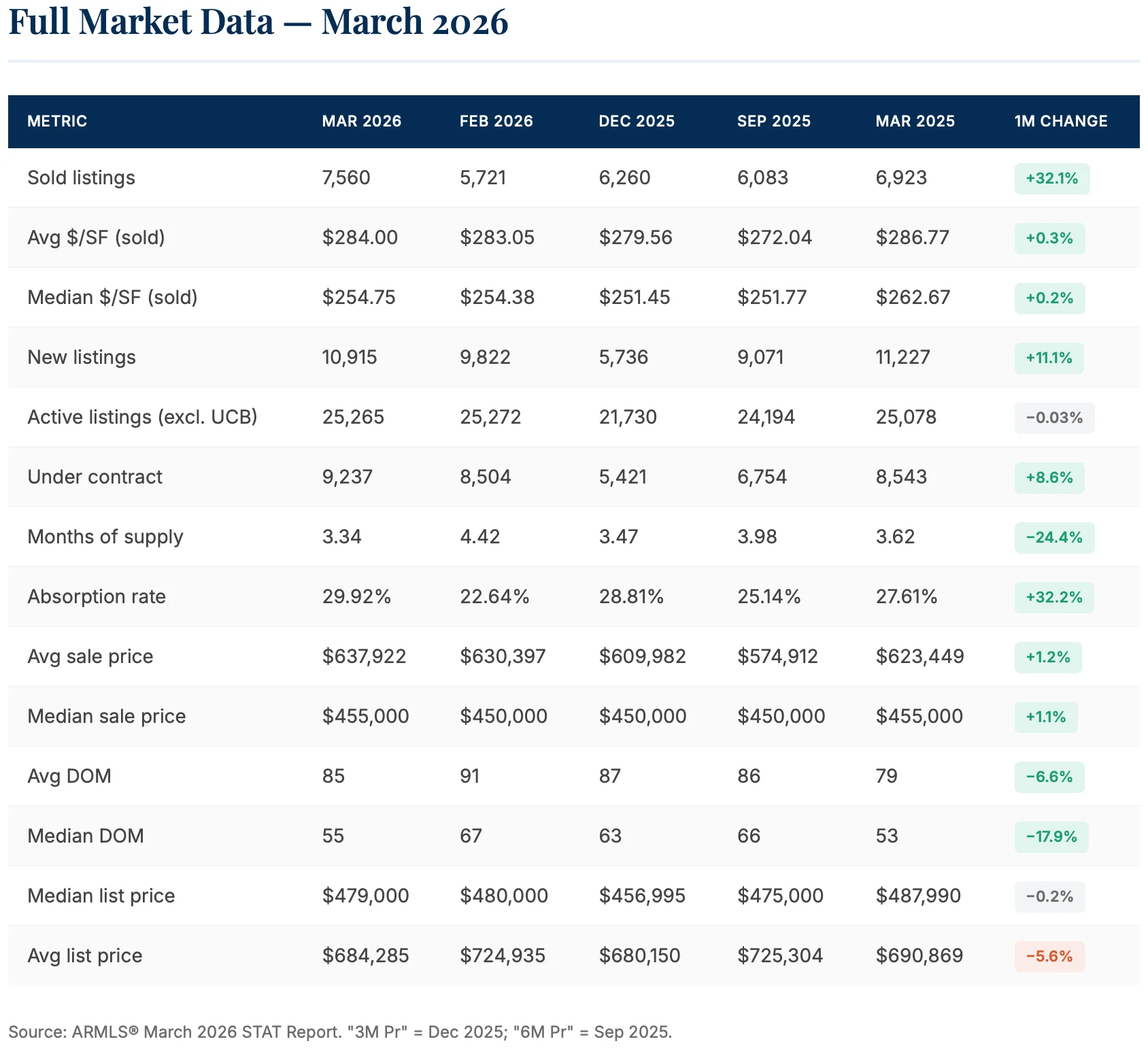
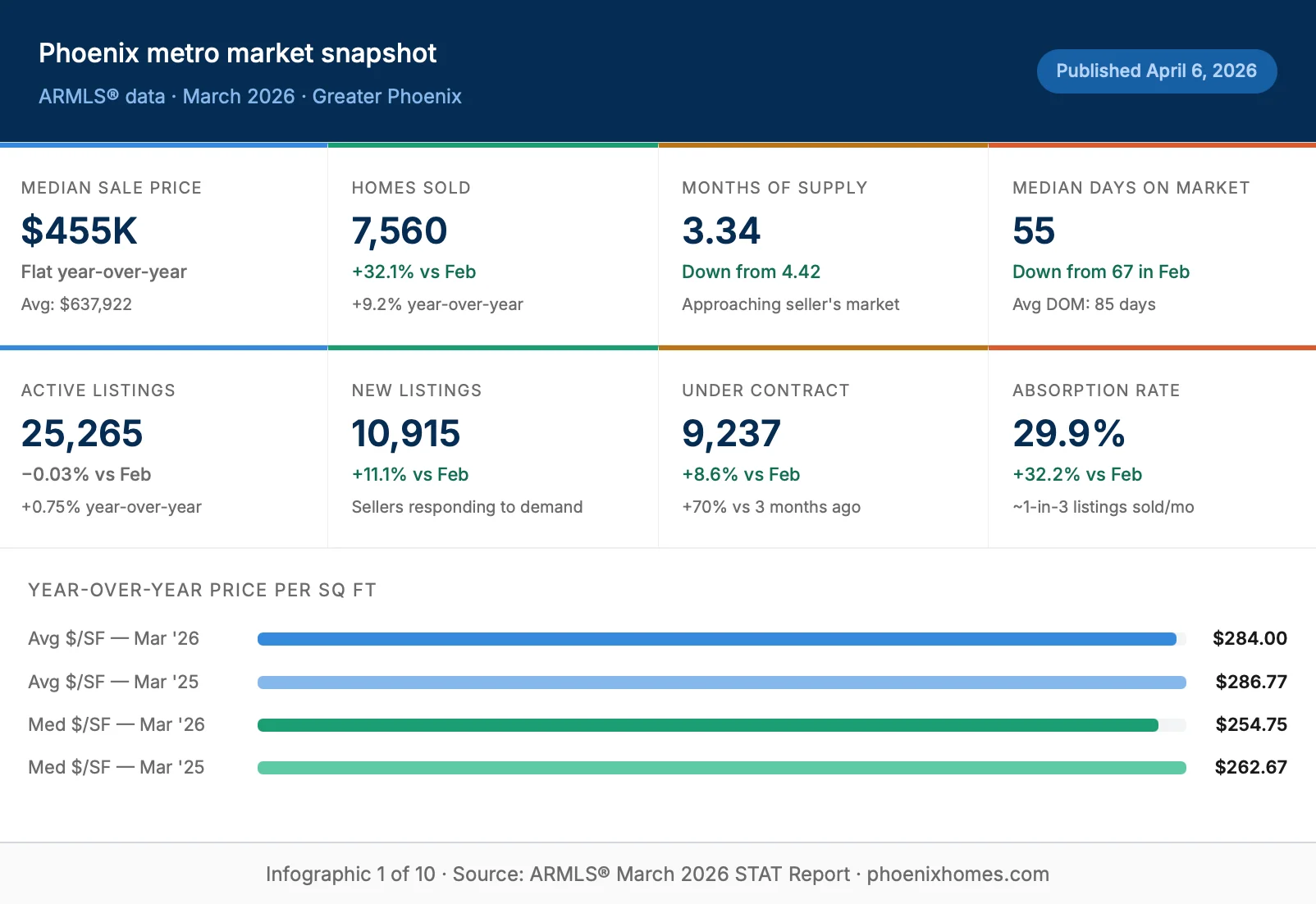
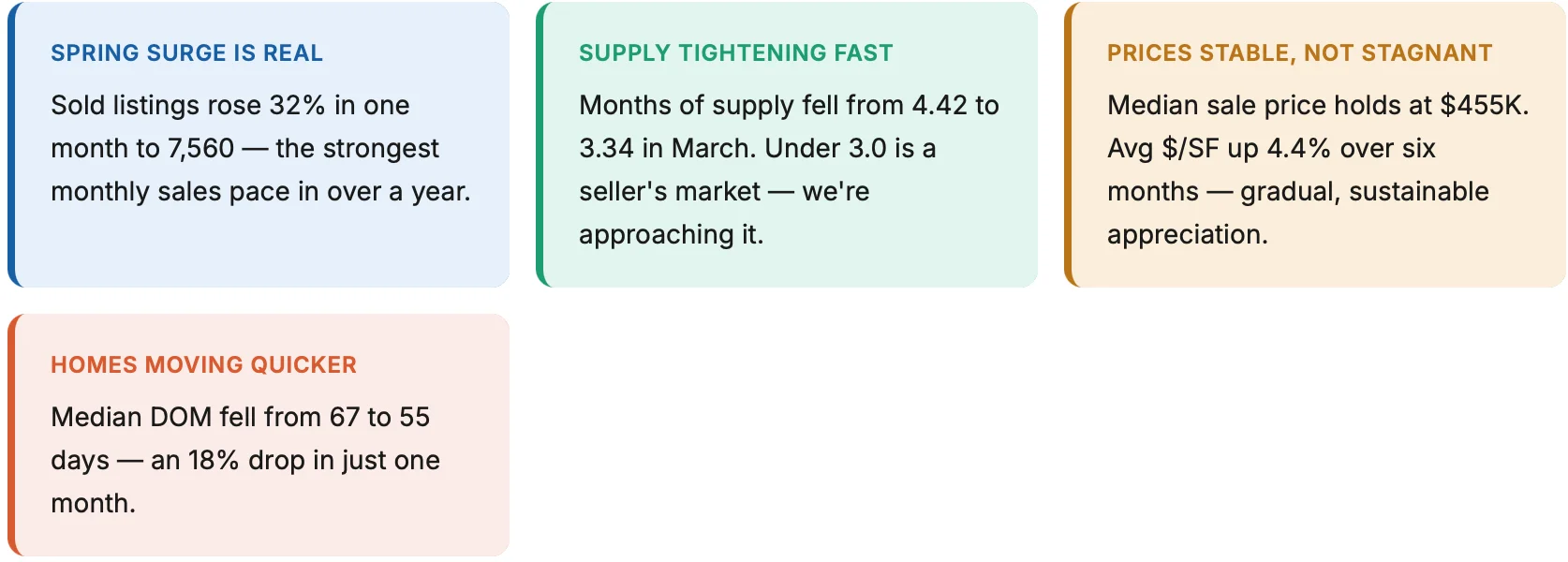
The Phoenix metro real estate market made a decisive statement in March 2026. According to the ARMLS® STAT Report, sold listings jumped 32.1% in a single month — from 5,721 in February to 7,560 in March. That’s the largest month-over-month sales jump in recent memory and confirms the spring buying season has arrived with conviction.
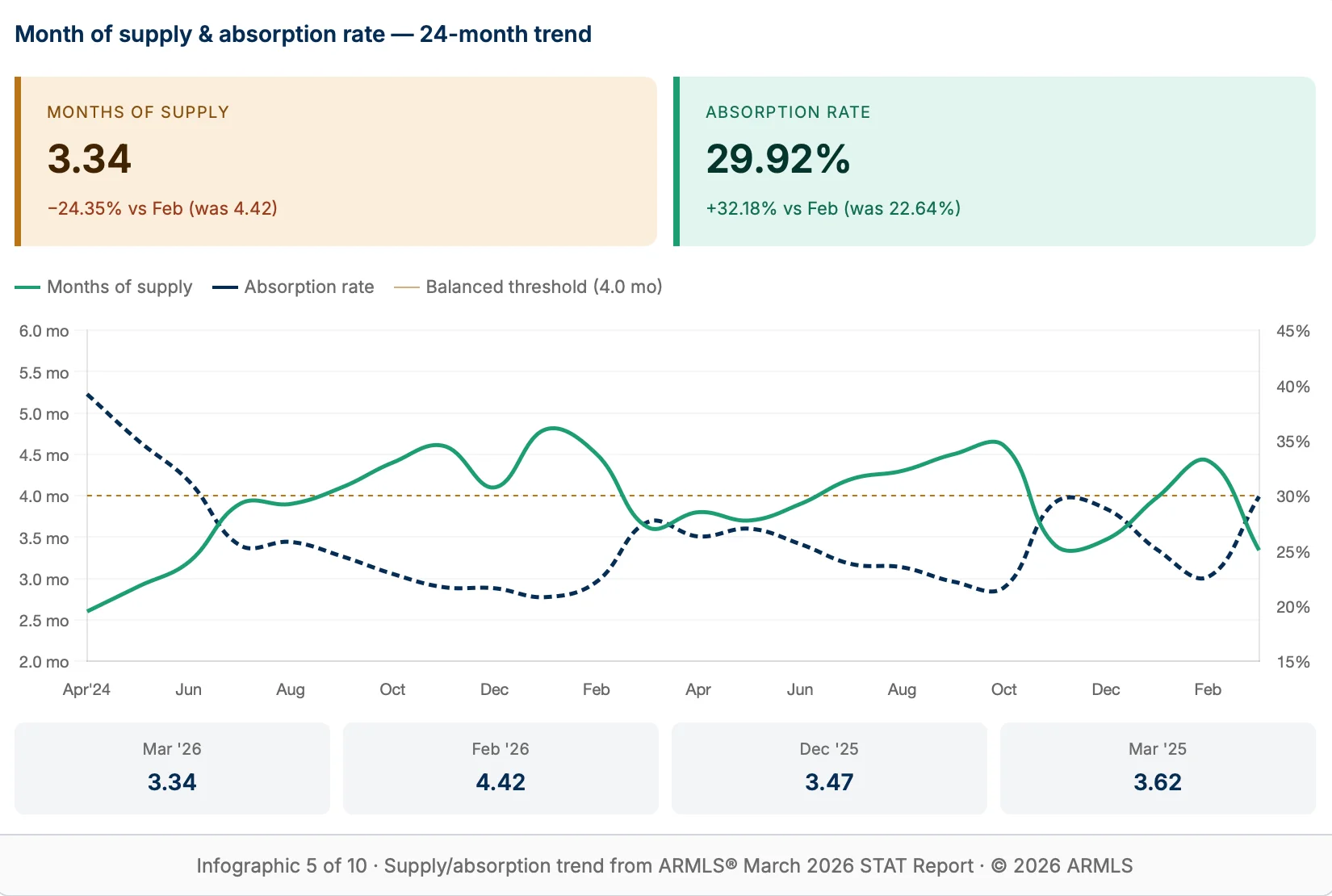
At the same time, months of supply dropped from 4.42 to 3.34 — a 24% decrease — and the absorption rate climbed to nearly 30%. Under-contract listings rose 8.6% to 9,237. Taken together, these metrics paint a picture of a market shifting from quietly balanced toward something with noticeably more demand momentum.
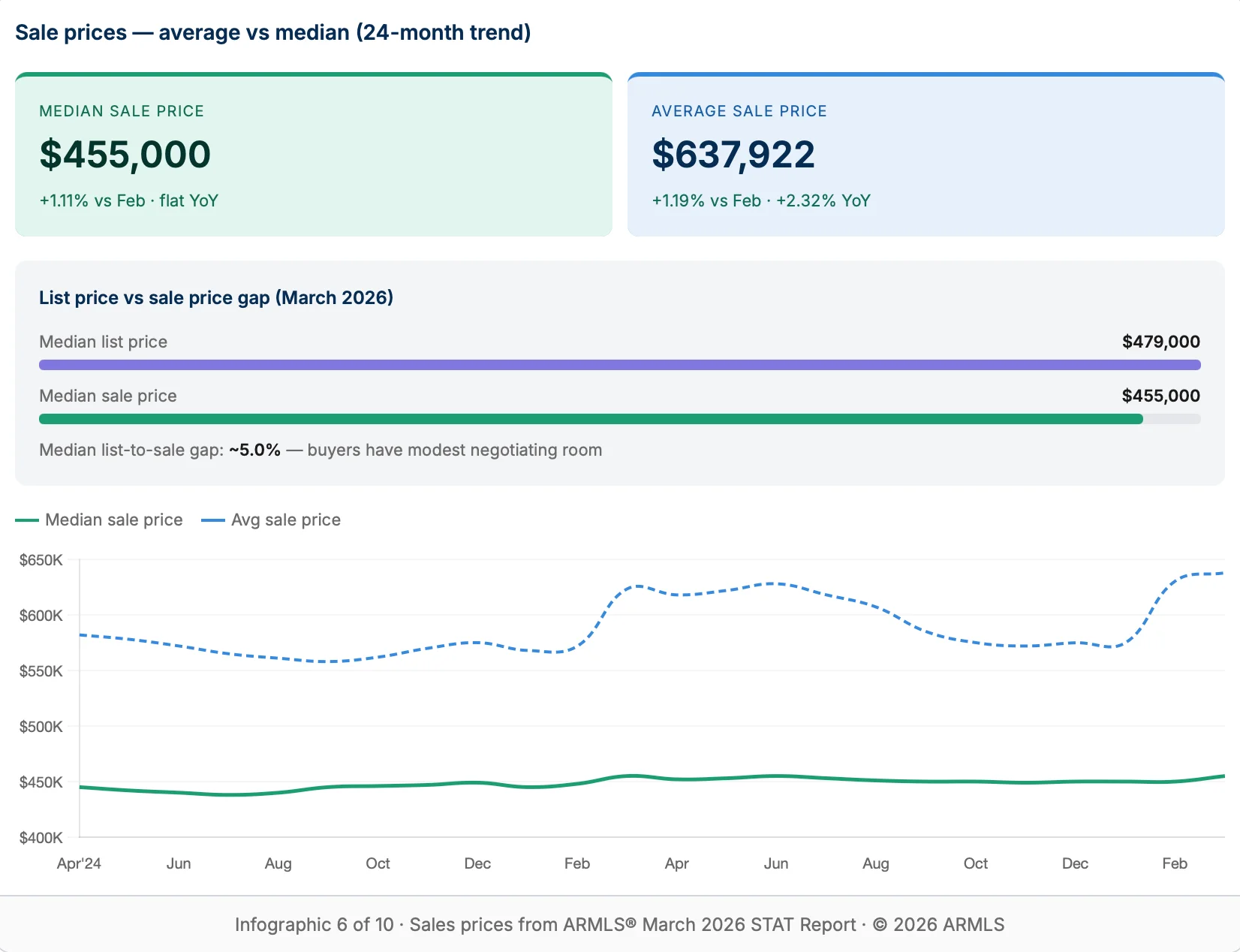
Yet this is not the frenzy of 2021. The median sale price of $455,000 is flat year-over-year. Active inventory of 25,265 homes means buyers still have meaningful choices. The story in March 2026 is healthy acceleration, not overheating.
Sold Listings: The Spring Surge Is Here
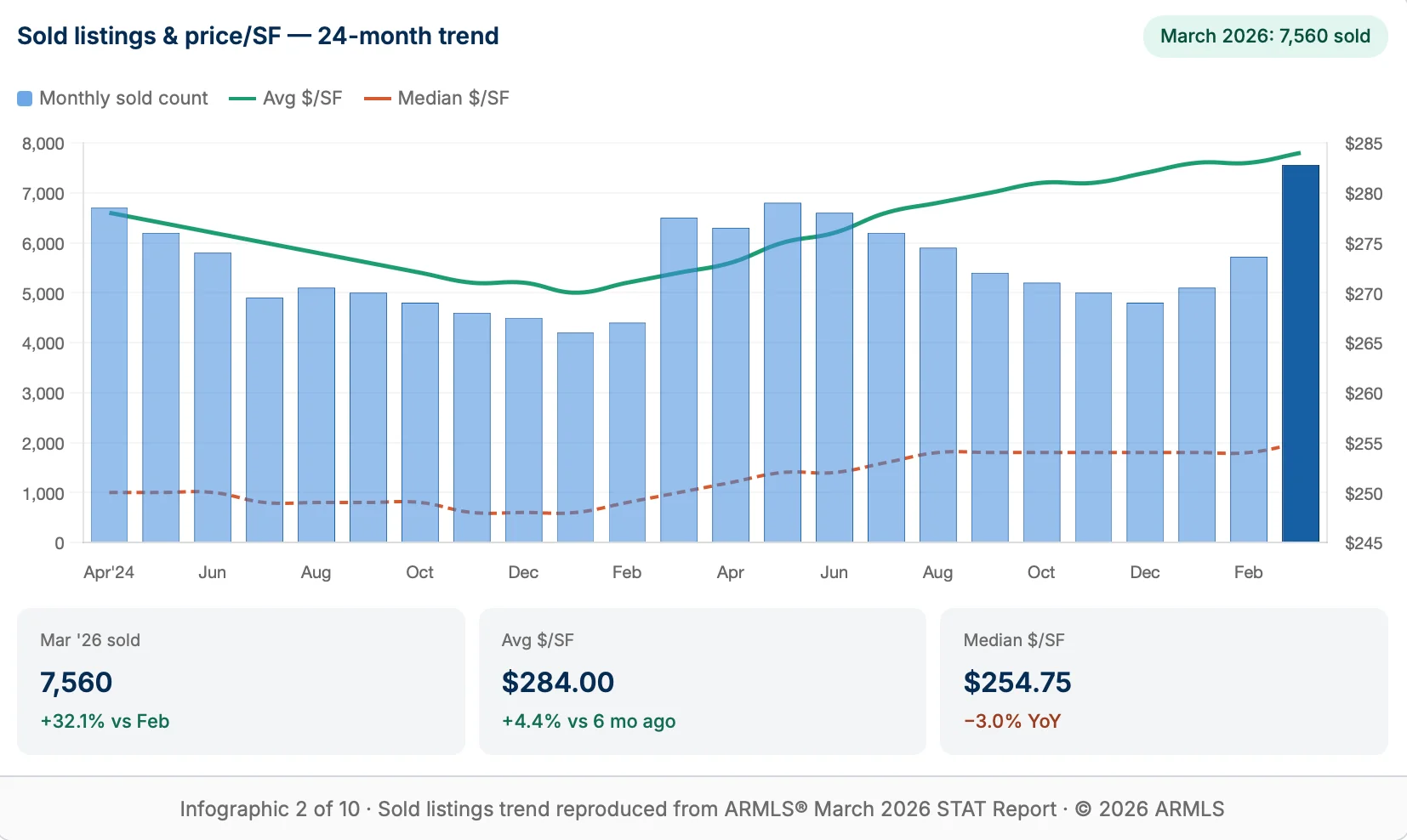
The Phoenix metro real estate market made a decisive statement in March 2026. According to the ARMLS® STAT Report, sold listings jumped 32.1% in a single month — from 5,721 in February to 7,560 in March. That’s the largest month-over-month sales jump in recent memory and confirms the spring buying season has arrived with conviction.
New Listings: Sellers Are Responding
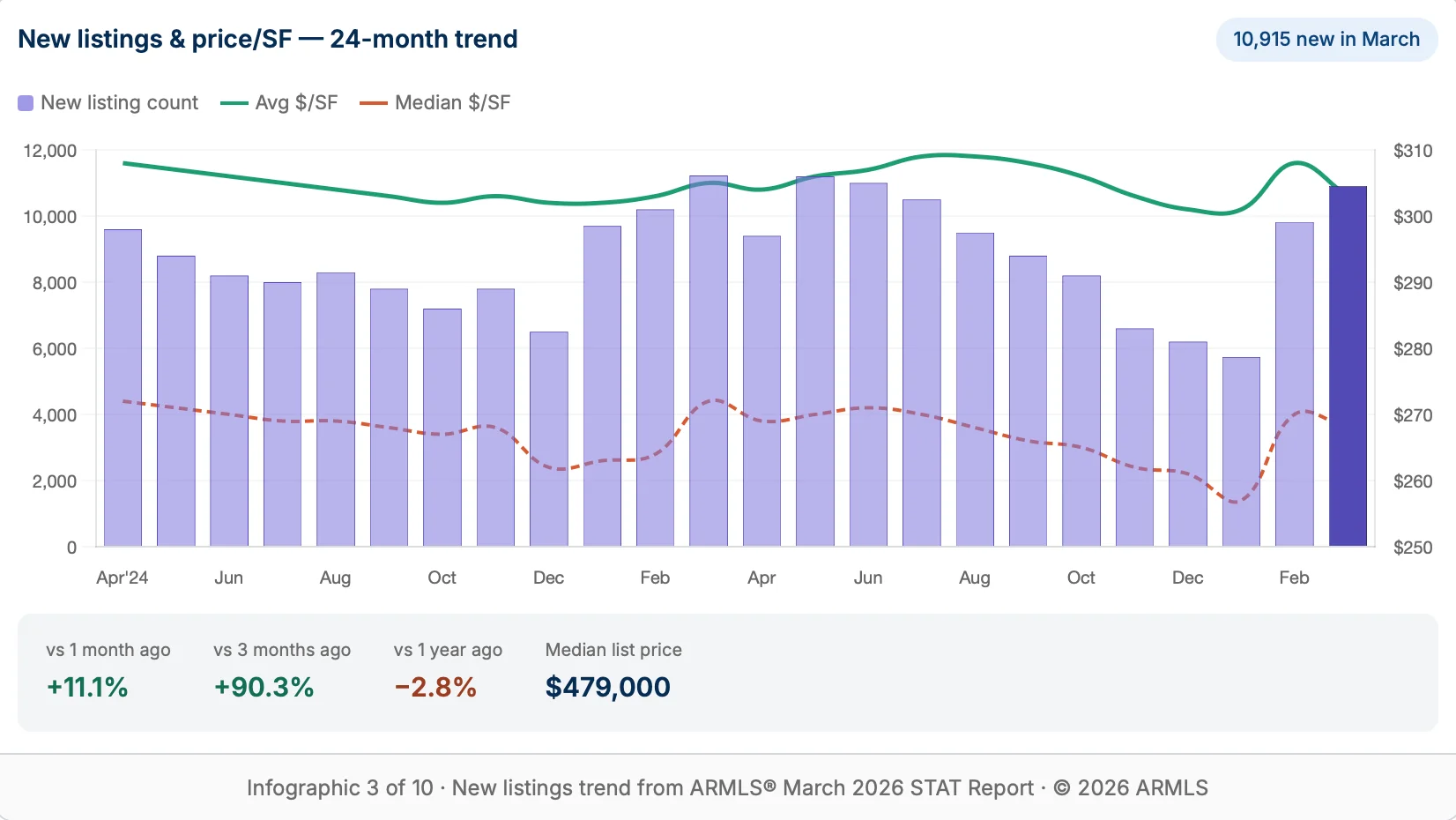
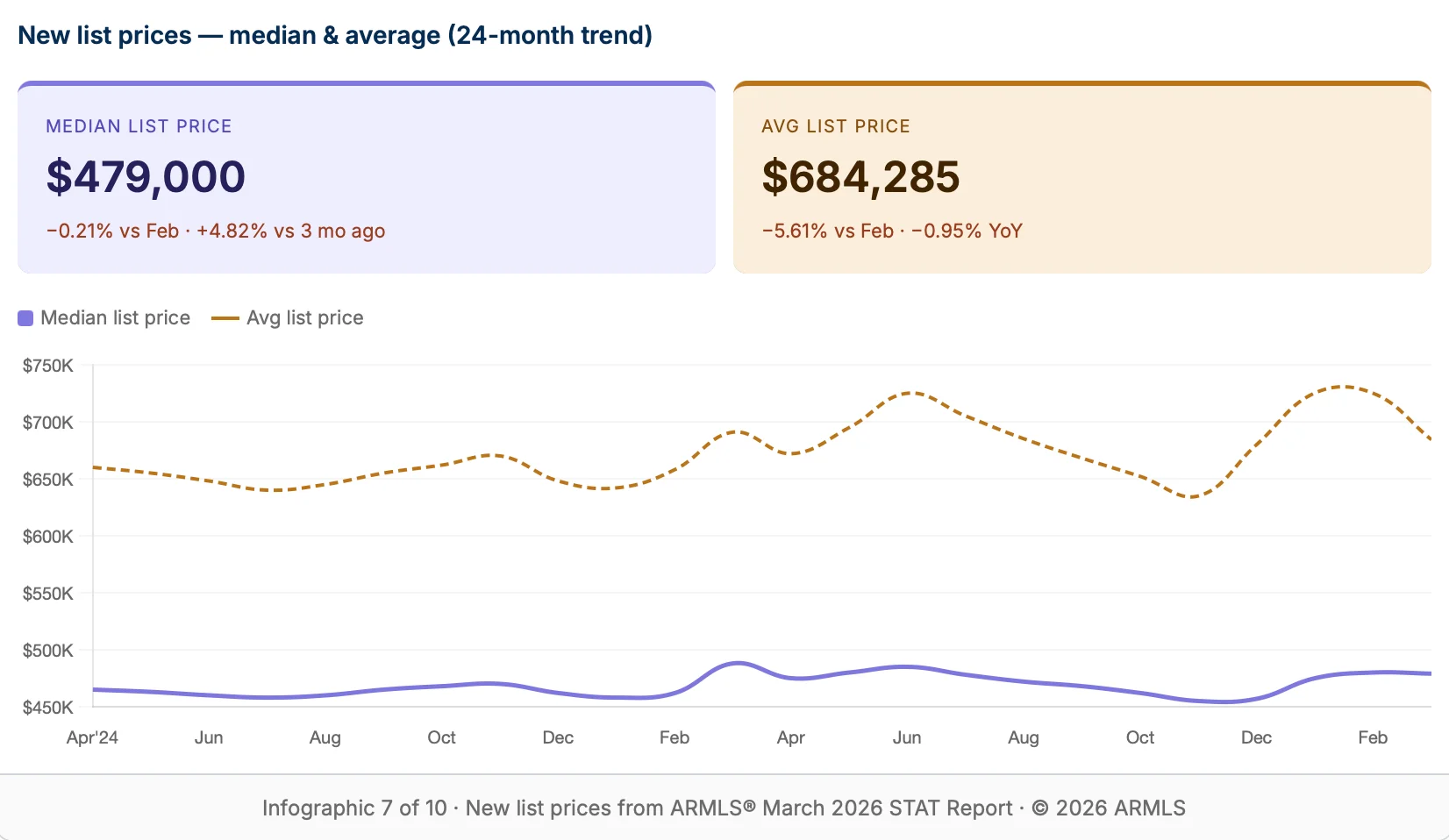
New listings climbed 11.1% month-over-month to 10,915 in March — the highest count in several months. The 90.3% jump versus three months ago reflects seasonal normalization out of the winter slow period. The average list price per square foot for new listings was $302.81, and the median new list price is $479,000.
One note of caution: new listing counts are slightly below year-ago levels (10,915 vs. 11,227 in March 2025), suggesting the “lock-in effect” — homeowners holding low pre-2022 mortgage rates — continues to mildly dampen supply. Search new listings here.
Inventory & Supply: The Balance Is Shifting
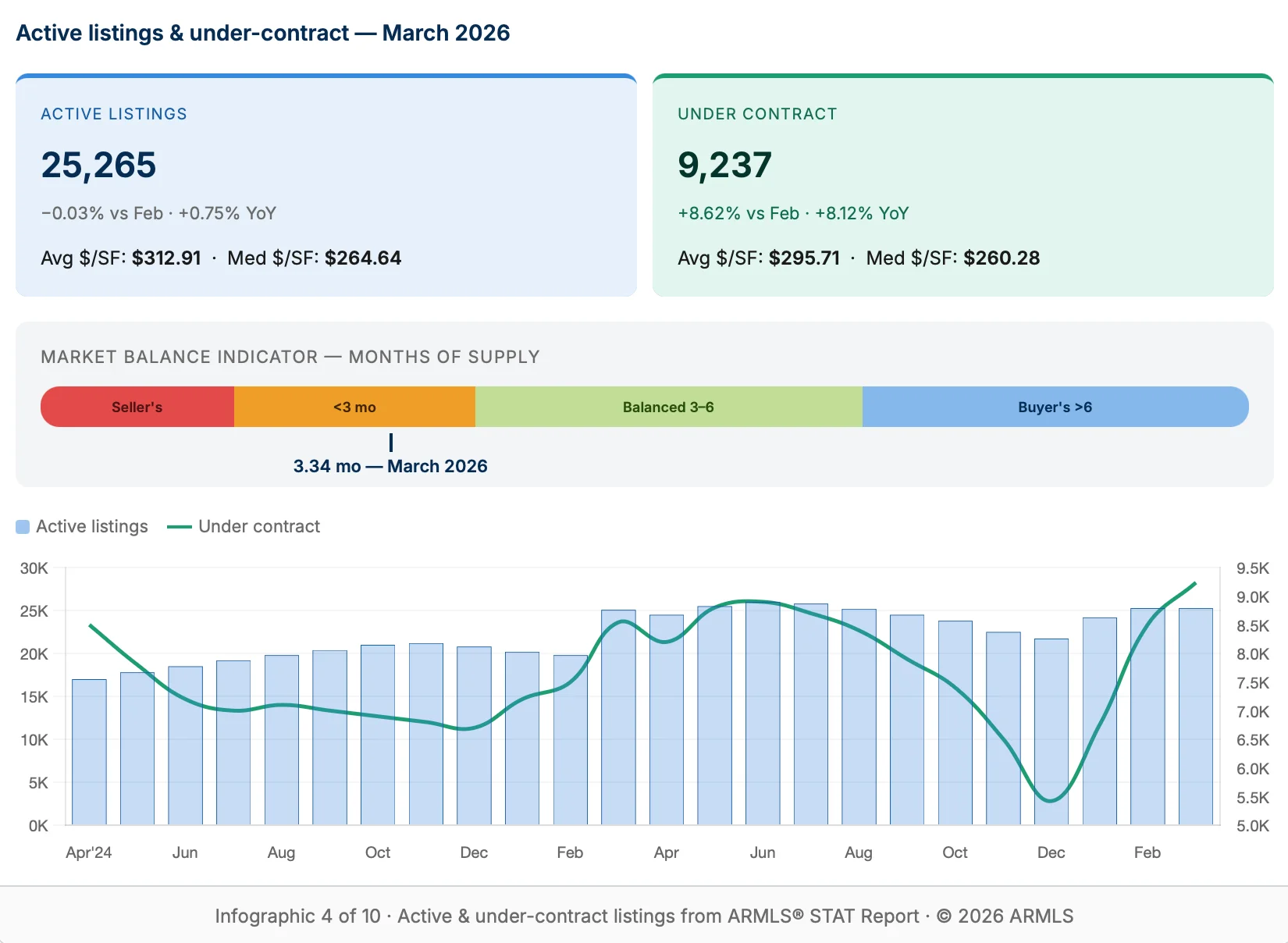
Active listings were essentially flat month-over-month at 25,265 — nearly identical to February’s 25,272. The months-of-supply metric is where the action is: at 3.34 months, supply has dropped to its lowest level since late 2024. Real estate professionals generally consider under 3 months a seller’s market, 3–4 months seller-leaning, 4–6 months balanced, and over 6 months a buyer’s market.
The absorption rate — the percentage of active listings that went under contract — jumped to 29.92% from 22.64%: for every 10 homes on the market, nearly 3 are getting scooped up each month.
Supply & Absorption: The Core Market Engine
Months of supply and the absorption rate are the two most forward-looking signals in any real estate market. In March 2026, both moved sharply in the same direction: supply contracted 24% and the absorption rate surged 32%. This is not noise — it’s the spring buying season compressing available inventory in real time.
Home Prices: Stable, Sustainable, and Slightly Rising
The Phoenix median sale price in March 2026 was $455,000 — flat compared to March 2025 and up 1.1% from February’s $450,000. The average sale price reached $637,922 in March, up 1.19% from February and 2.32% year-over-year. The spread between median ($455K) and average ($638K) reflects the impact of luxury home sales on the overall average.
New List Prices: What Sellers Are Asking
The median new list price in March was $479,000 — essentially flat from February’s $480,000. The average new list price dropped 5.6% to $684,285 as more mid-range homes entered the market and some sellers recalibrated after winter overpricing. This convergence is healthy: sellers pricing closer to what buyers will actually pay.
Days on Market: Speed Is Returning
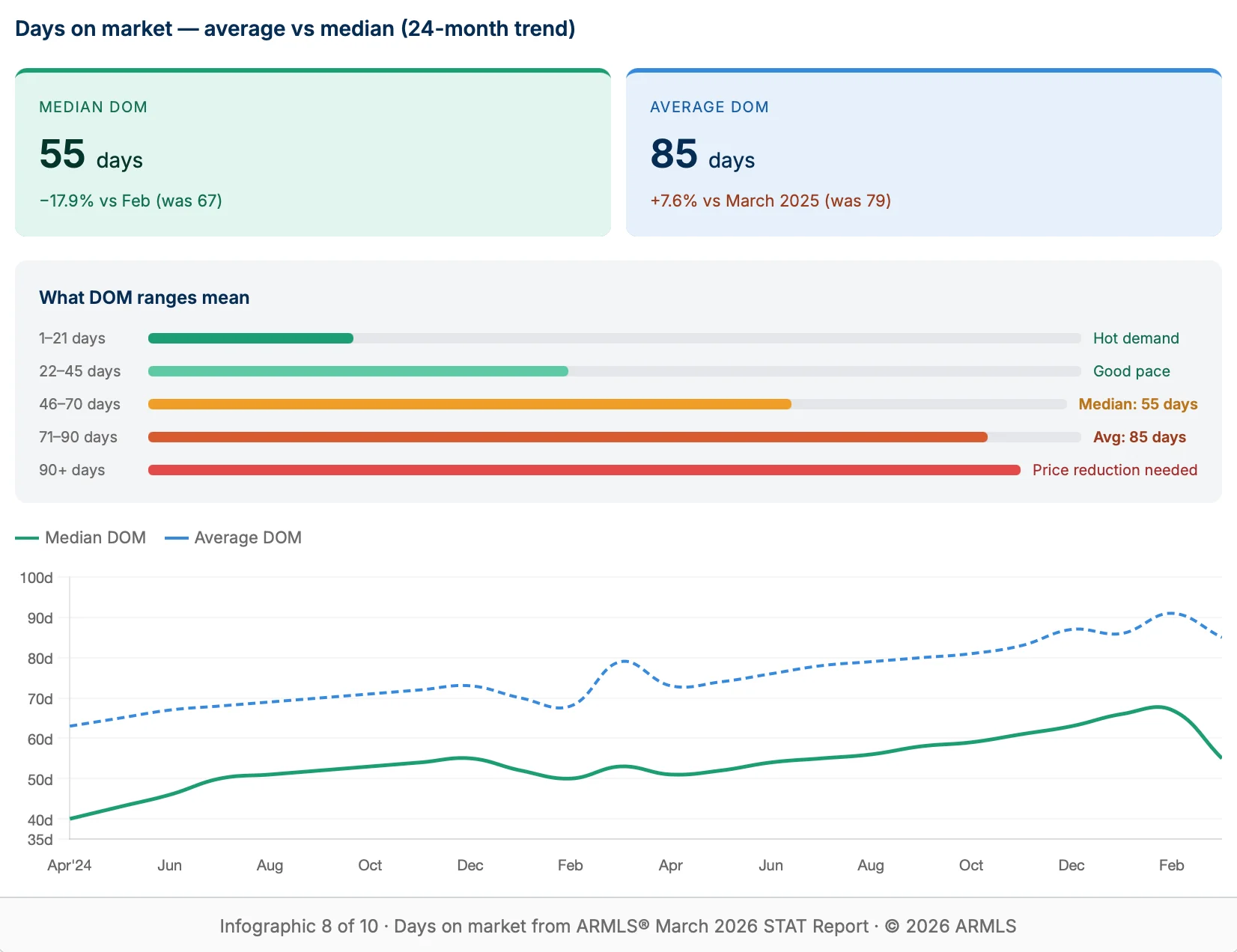
The median DOM fell from 67 days in February to 55 days in March — a 17.9% improvement in a single month. The average DOM also declined, from 91 days to 85 days. Well-priced, well-presented homes in desirable Phoenix submarkets are again seeing quicker offer timelines. Overpriced homes will still sit — but motivated sellers who price correctly should see meaningful buyer interest within the first two to three weeks on market.
Mortgage Rate Context & Affordability
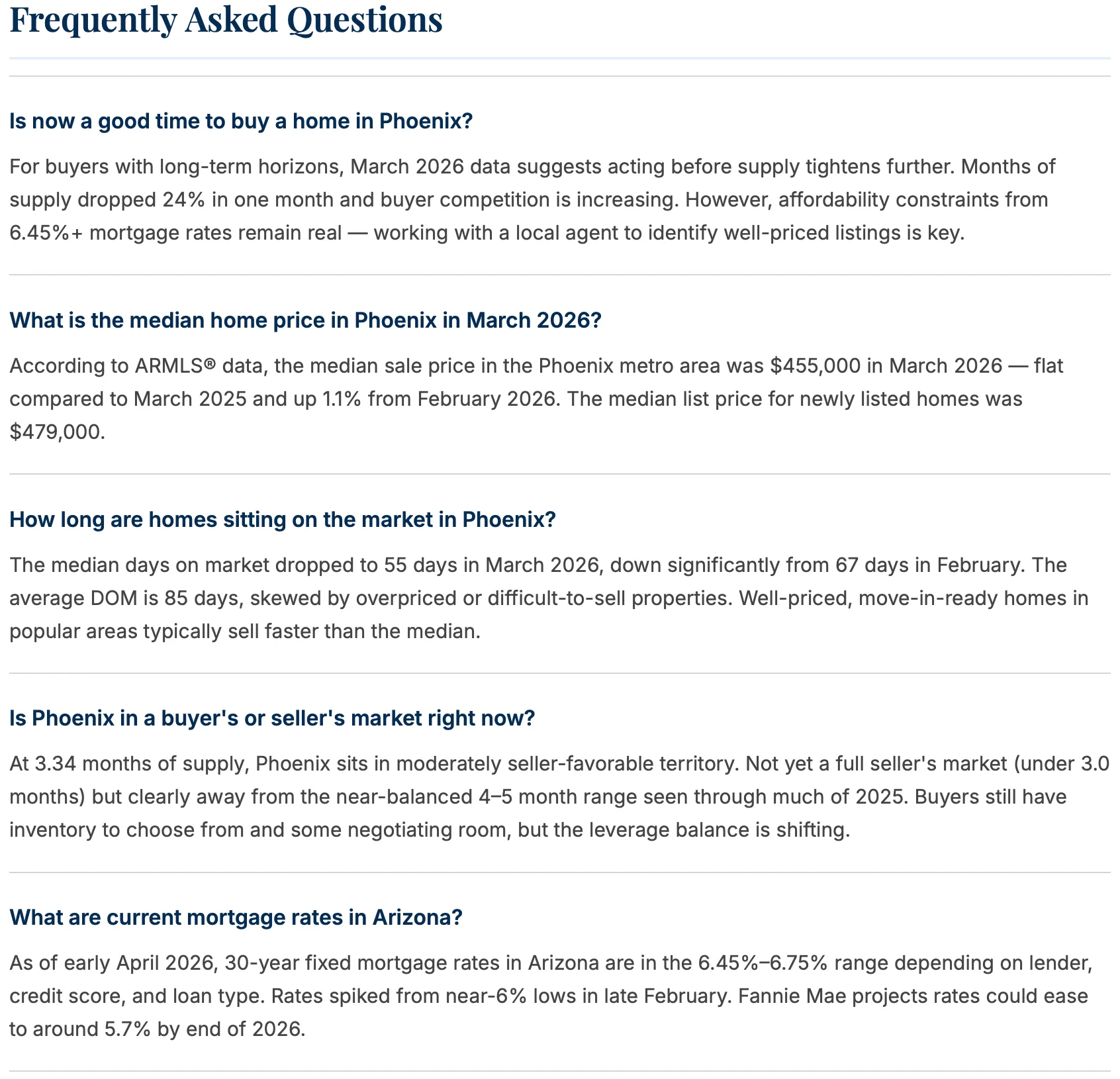
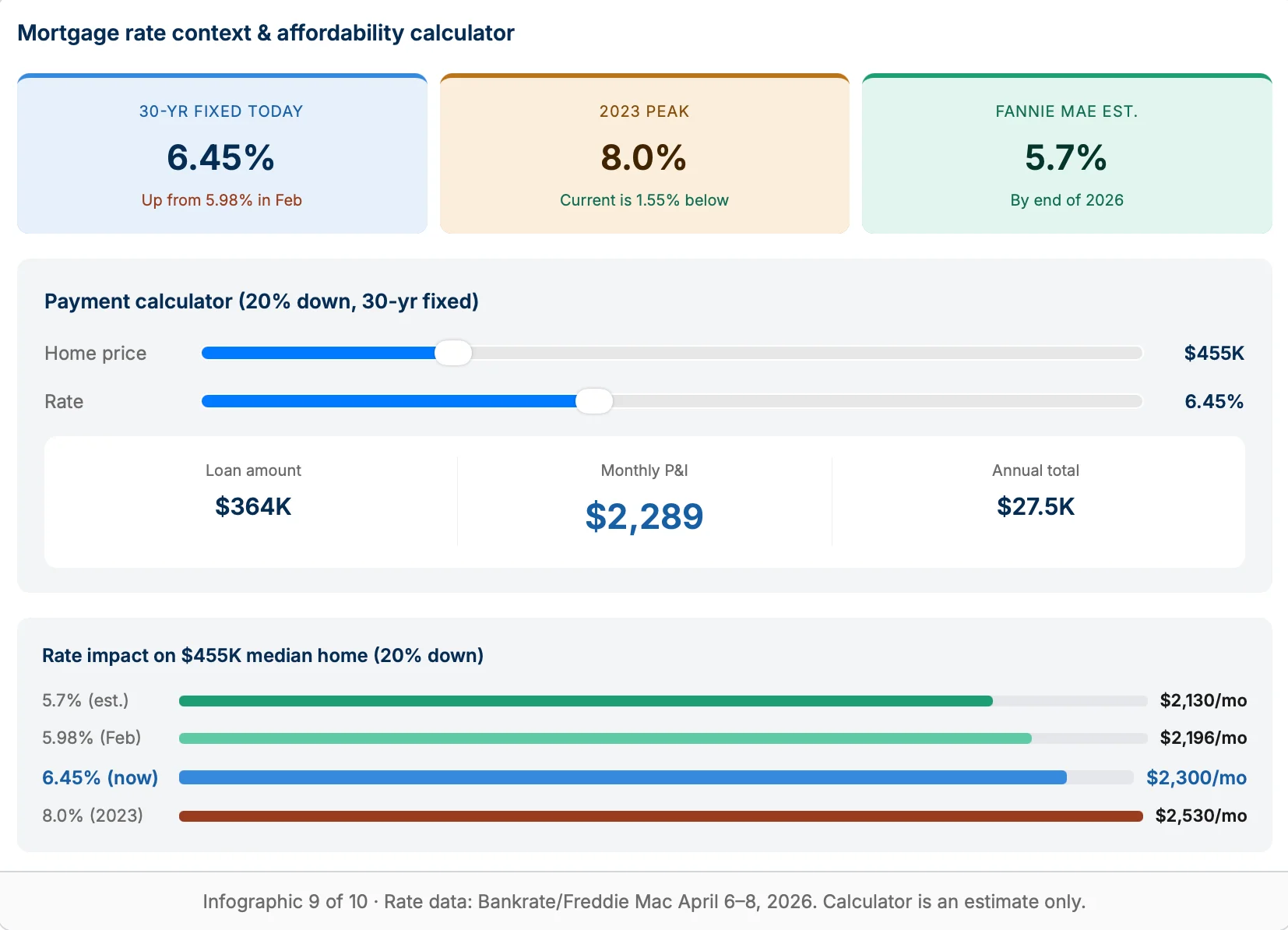
As of early April 2026, the 30-year fixed mortgage rate has climbed back to approximately 6.45%–6.55% after briefly dipping under 6% in late February — its lowest level in over three years. The rate rebound is driven by geopolitical uncertainty from the conflict in the Middle East, pushing up oil prices and inflation expectations. Fannie Mae projects rates could fall toward 5.7% by year-end 2026, which would meaningfully improve affordability. Check your affordability with our Mortgage calculator
Buyer & Seller Strategy for Spring 2026
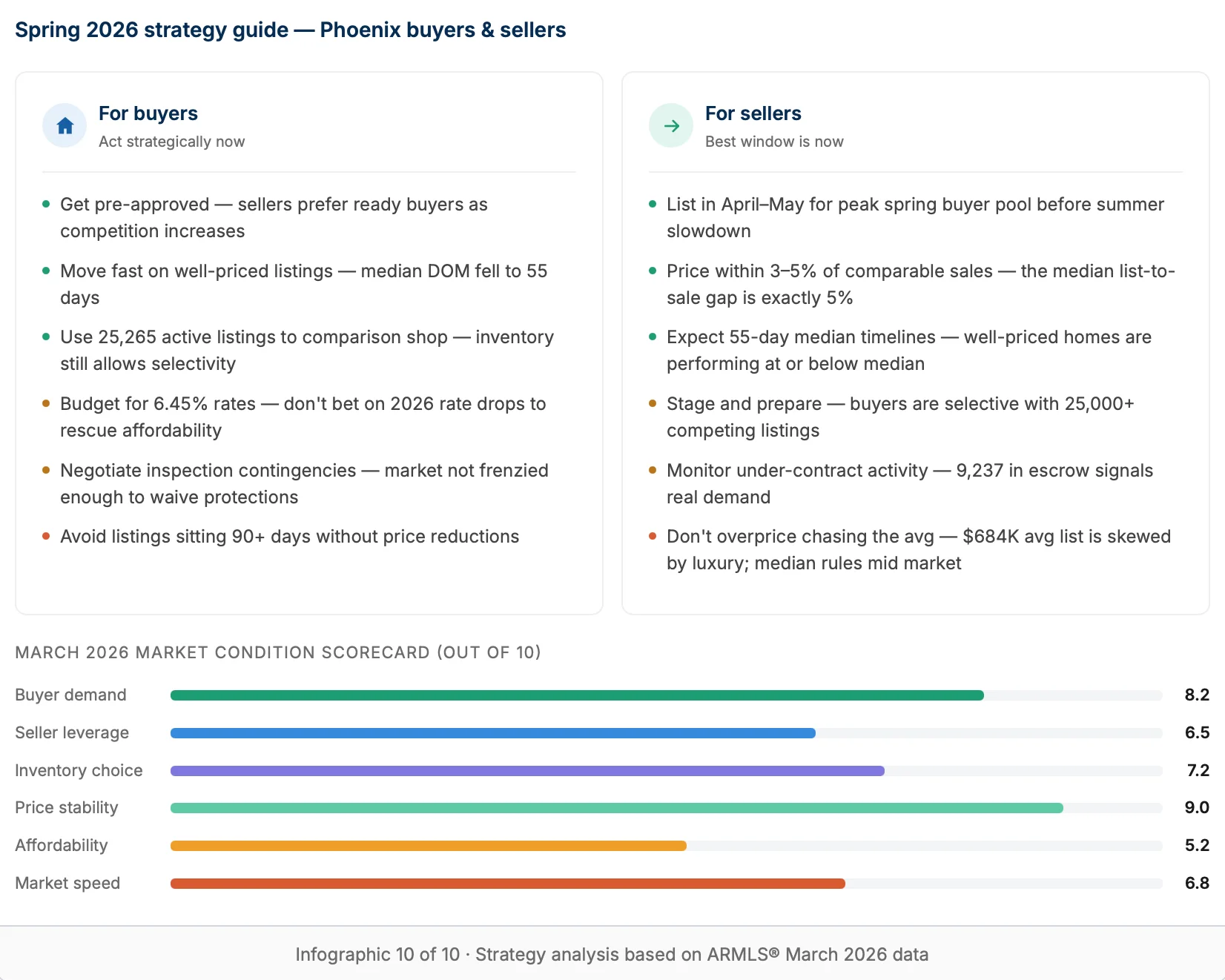
For buyers, the window of maximum leverage is narrowing. March’s data is clear: more buyers are moving, homes are selling faster, and supply is tightening. That doesn’t mean panic-buying — 25,000+ active listings is not a drought — but waiting solely in hopes of price drops may not be optimal. For sellers, spring is traditionally Phoenix’s strongest selling window. List in April or May to benefit from peak buyer pool before summer heat slows activity.